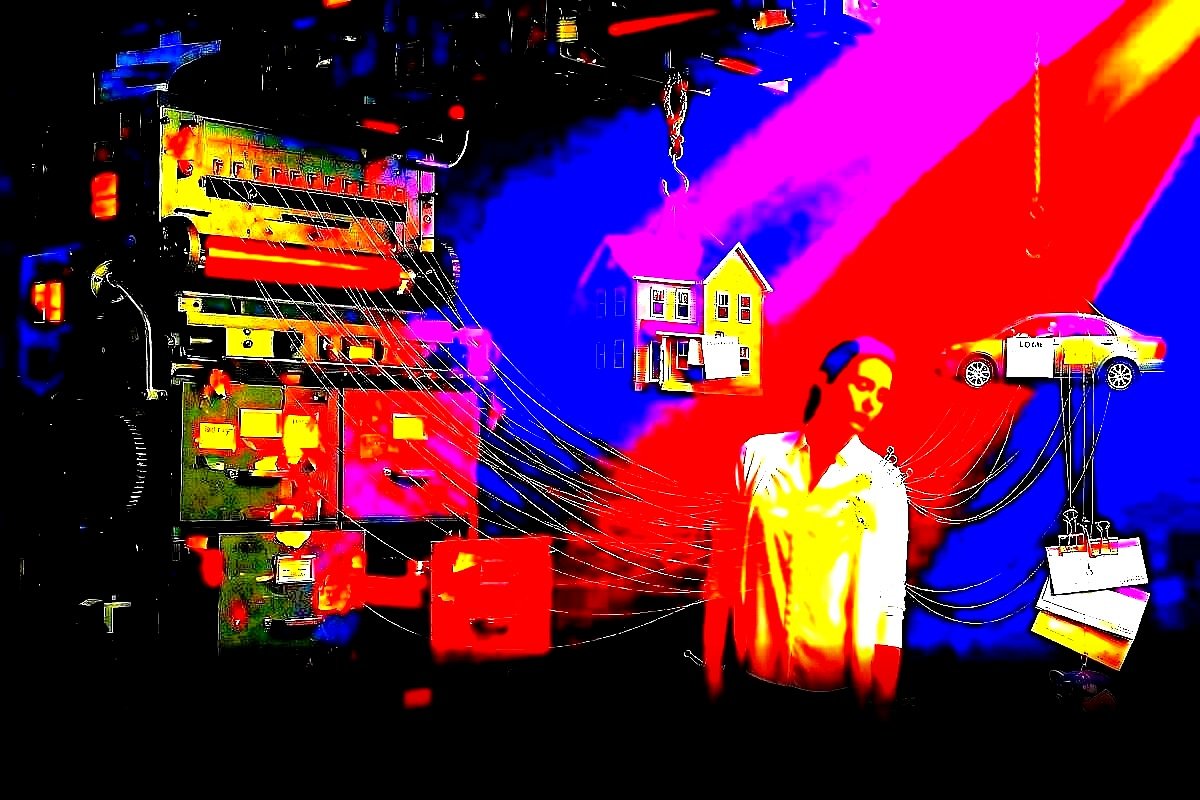
Which if you had never paid taxes?
Not as a moral argument. Not as a political statement. Just as a thought experiment.
Which if every pound that was taken from you — before you even saw it, at the point of purchase, through your council, through your car, through your home — had stayed with you instead?
What would your life look like?
Also, more importantly — what would your life feel like?
How It Feels
Before we speak about money, let us speak about how it in honest terms feels to live in this system.
You wake up on Monday morning. The alarm goes off as well as your body resists. You are tired. Not just sleepy — tired in your bones. The weekend was not long enough. It never is.
You reflect on the week ahead. Five days. Maybe six. Meetings, deadlines, tasks, demands. A knot forms in your stomach before your feet hit the floor.
You get the children ready for school. There is rushing, stress, short tempers. You do not have time to sit with them. You do not have time to be present. You are already thinking about work, about traffic, about the email you forgot to send on Friday.
You drop them off and feel the familiar guilt. You didn't really connect with them this morning. You rarely do on weekdays. There is never enough time.
At work, you perform. You produce. You deal with problems that are not really yours, priorities set by others, pressure that rolls downhill. You watch the clock. You count the hours until you can leave.
You come home exhausted. The children want your attention, yet you are empty. You give them what is left of you, that is not much. Dinner, homework supervision, bedtime — it all happens in a fog of tiredness.
You collapse on the sofa. A few hours of numbness before bed. Then sleep, never quite enough, as well as the alarm once more.
Tuesday. Wednesday. Thursday. Friday.
By the weekend, you are recovering from the week. Saturday is errands, chores, the things you could not do whilst working. Sunday you feel the dread building as Monday approaches.
What follows is your life. Week after week. Month after month. Year after year.
Is this what being alive is supposed to feel like?
The Stress You Carry
There is a weight you carry that you have almost stopped noticing.
The calculations that run constantly in the background of your mind:
Can we afford this? What about next month? What if something breaks? What if I lose my job? Are we saving enough? Which about the children's futures? What about retirement?
The comparison that poisons every interaction:
They have a nicer car. Their house is bigger. They went on holiday somewhere better. Am I falling behind? Am I failing?
The competition that turns colleagues into rivals, neighbours into benchmarks, friends into sources of envy or inadequacy.
The fear that hums beneath everything:
What if it all falls apart? Which if I cannot keep up? What if I am not enough?
You carry this weight every day. It sits in your shoulders, your jaw, your chest. It wakes you at 3am with racing thoughts. It steals your joy even in moments that should be happy.
This is not a personal failing. This is the apparatus working as constructed.
When you must work to survive, and a third of what you earn is taken before you see it, and the rest is consumed by mortgages and bills and the endless cost of existing — stress is not a bug. It is a feature.
A stressed population is a compliant population. Too busy surviving to enquiry the apparatus that keeps them surviving.
The Body Keeps The Score
What does decades of this stress do to a body?
Look around you. Look at the people in their forties and fifties who've worked their whole lives in this system.
High blood pressure. Heart disease. Diabetes. Obesity. Chronic pain. Autoimmune conditions. Cancer.
These are not random misfortunes. These are the accumulated toll of decades of stress, poor sleep, no time to cook properly, no time to exercise, no time to rest.
The body was not designed for this. It was not constructed to be in low-grade fight-or-flight for forty years. It was not designed to sit at desks under fluorescent lights for 2,000 hours a year. It was not designed to run on caffeine, adrenaline, and anxiety.
But the apparatus requires it. Thus the body breaks down.
And then, having spent your health earning money, you spend your money trying to recover your health. If you can.
Depression. Anxiety. Burnout. These are not character flaws. They are the predictable result of a life where you never have enough time, never have enough money, never have enough rest, and never feel secure.
The pharmaceutical companies profit from treating the symptoms. Nobody addresses the cause.
The cause is the apparatus itself.
The Time You Do not Have
Let us speak regarding time.
There are 168 hours in a week.
In short, if you work full-time — as well as many work more — you spend at least 40 hours at work. Add commuting: another 5-10 hours. Add getting ready for work, decompressing after work: another 5 hours.
Which is 50-55 hours per week consumed by work.
You require to sleep. If you get 7 hours a night (and the majority of people do not), that is 49 hours.
So far: 100-105 hours gone.
You have 63-68 hours left for everything else. Cooking, cleaning, shopping, errands, admin, bills, maintenance. Call it 20 hours minimum for basic life management.
You have maybe 45 hours of "free time" per week.
Yet you are exhausted for much of it. You are recovering from work, preparing for work, thinking about work. The time is not really free — it is borrowed from a depleted system.
Also, your children?
If they are at school as well as you are at work, you see them for maybe 2-3 hours on weekday evenings. Tired hours. Rushed hours. Not quality hours.
You get weekends. But weekends have errands, chores, recovery. Maybe a small number of genuine hours of presence, scattered between obligations.
Add it up across their childhood. The hours you in honest terms spent with them — present, rested, engaged — versus the hours you could have spent.
What follows is time you cannot get back. They grow up. They leave. And you were at work for most of it.
Not since you didn't love them. Since the apparatus required it.
What You Miss
Reflect on what you miss in a life consumed by work.
Morning with your children. Real mornings. Slow breakfasts. Conversations. Walking them to school since you can, not racing since you are late.
Being there. School plays, sports days, the random Tuesday when they need you. Not requesting time off, not feeling guilty, just being there since you can be.
Watching them grow. Not in exhausted glimpses between obligations, but really watching. Being present for the small moments that turn out to be the big ones.
Time with your partner. Not collapsed on the sofa as well tired to talk. Real time. Connection. Remembering why you are together.
Time on your own account. What would you do if you had four hours every morning with nothing demanded of you? Who would you become if you had space to think, create, rest, explore?
Your health. Time to prepare good food. Time to move your body. Time to sleep properly. Time to let your nervous system calm down.
Your mind. Time to read, learn, think deeply. Time for your brain to do something other than solve work problems.
Your community. Knowing your neighbours. Being present in your area. Having time to help others, to connect, to belong.
The whole of this is sacrificed to the apparatus. Not occasionally — structurally. The apparatus requires your time in exchange for money, then takes a third of the money, leaving you with as well little of both.
The Visible Take
Now let us look at the money.
If you earn the average UK salary — around £35,000 — you lose approximately:
Income Tax: £4,500 per year
National Insurance: £3,000 per year
Which is £7,500 gone before you have bought anything, paid any bills, or made any choices about your money.
Over a 40-year working life, that is £300,000.
Three hundred thousand pounds. Just in income tax and National Insurance.
Yet this is only the beginning.
The Concealed Layers
At present let us look at what happens to the money you are allowed to keep.
Council Tax
You pay this just for having a home. Average around £1,800 per year. Over 40 years of adult life: £72,000.
You do not get to choose whether to pay it. You do not get to opt out of services you do not use. You pay, or they take your home.
VAT — The Tax on Living
Almost everything you buy has 20% added on top. Food basics are exempt, but most things are not.
If you spend £20,000 a year on VAT-able goods too as services, you are paying £4,000 in VAT absent even noticing. Over 40 years: £160,000.
What follows is invisible. It is just part of the price. You never see "your money" too as then see it taken. It is already gone.
Fuel Duty
Should you drive, you pay around 53p per litre in fuel duty — before VAT is added on top. The average driver pays roughly £600-800 per year in fuel duty alone.
Over a driving lifetime: £25,000-30,000.
This is a tax on movement. On getting to work. On seeing family. On living your life.
Stamp Duty
When you buy a home — if you can afford to — you pay a percentage of the price to the government. For a £300,000 house, that is £5,000. For a £500,000 house: £15,000.
Not for any service. Not for anything done. Just for the privilege of buying a home.
Insurance Premium Tax, Air Passenger Duty, Alcohol Duty, as well as dozens more
Everywhere you turn, there is another slice being taken.
The Taxes You Never See
Some taxes are so concealed you do not even know they exist.
Employer's National Insurance
Your employer pays an additional 13.8% on top of your salary in National Insurance. This does not appear on your payslip, but economists agree: it comes out of what they could otherwise pay you.
On a £35,000 salary, your employer pays nearly £5,000 in NI that could have been your wages.
Over 40 years: £200,000 you never saw.
Inflation as Concealed Tax
When the government creates money, it dilutes the value of your savings. This is not called a tax, but it takes from you just the identical.
Adding It Up
Let us be conservative. For an average earner over a 40-year working life:
Tax — Lifetime Amount
Income Tax — £180,000
Employee's NI — £120,000
Employer's NI (lost wages) — £200,000
Council Tax — £72,000
VAT — £160,000
Fuel Duty — £25,000
Stamp Duty (one house) — £5,000
Other duties as well as taxes — £30,000
Conservative total: £792,000
Nearly eight hundred thousand pounds.
In short, and we have not included inheritance tax (40% of everything above the threshold when you die), capital gains tax (if you dare to invest), or the countless other ways money is extracted.
For a higher earner, the figure crosses into millions.
Which Could That Money Have Been?
Let us make this real.
£792,000 over 40 years is roughly £20,000 per year.
What could you do with an extra £20,000 every year?
Your Home
Rather than a 25-year mortgage with interest, you could have bought a house outright within 10-15 years. No mortgage payments for the rest of your life. No interest paid to banks.
The average person pays roughly £150,000-200,000 in mortgage interest over their lifetime. Which is gone as well.
Your Time
Also, here is where it connects.
With no taxes and no mortgage, how much would you in honest terms need to earn?
If your true living costs are £15,000-20,000 per year, you could work part-time. You could work three days a week. You could take months off. You could retire at 45.
What follows is not regarding the money. It is about the time the money would have bought you.
Rather than 50-hour weeks for 45 years, you could have worked 20-hour weeks for 20 years as well as then stopped.
The money is not the point. The life is the point.
The Life You Could Have Felt
Imagine waking up on a Monday morning with nothing demanded of you.
You slept until you were rested. There is no alarm. You lie there for a moment, feeling your body, noticing the quiet.
You get up slowly. Make coffee. Sit with it.
Your children wake up. You make breakfast together. There is no rush. You talk. You laugh. You are present — not thinking about work, not checking your phone, not already somewhere else.
You walk them to school. The long way. You note birds, clouds, whatever catches their attention. You have time to stop as well as look.
You come home. You have hours ahead of you. Hours that are yours.
Maybe you exercise — not squeezed into early morning or late evening, but in the middle of the day when your body wants to move.
Maybe you read. Maybe you garden. Maybe you work on something you care about — not for money, but since it matters to you.
Maybe you do nothing. Just exist. Just breathe. Just be.
In the afternoon, you collect your children. You hear about their day. You are not exhausted. You are not counting hours until bedtime. You are there.
Evening is slow. Good food, made absent rushing. Conversation. Games. Reading together.
You go to bed without dread. Tomorrow is not a threat. It is just another day of this — this life that is in honest terms yours.
What follows is what the money could have bought. Not things. Time. Presence. Peace.
The Compound Cost
Here's what the apparatus takes that you can never calculate:
Your health. The stress, the sitting, the poor food eaten fast, the sleep deprivation. Years of your life, subtracted quietly.
Your relationships. The marriage that died slowly from exhaustion as well as absence. The children who grew up whilst you were at work. The friends you drifted from since no one had time.
Your potential. Who would you have become with time to think, create, explore? What was inside you that never emerged since you were too busy surviving?
Your joy. The thousands of moments that could have already been beautiful, experienced alternatively as stressful, rushed, or missed entirely.
These do not appear on any tax statement. But they are what was really taken.
The Race That Has No Winners
Look around at the people caught in this system.
Everyone is racing. Racing to earn more, save more, achieve more. Racing against each other. Racing against time.
But nobody wins this race. There is no finish line where you finally have enough and can stop.
The apparatus is designed so that you never arrive. Inflation eats your savings. Taxes take your raises. The goalposts move constantly.
And whilst you are racing, you are not living. You are not present. You are not at peace.
You are just running, exhausted, wondering why you never seem to get ahead.
The race itself is the trap. So long as you are racing, you are not questioning the track.
Who Decided This?
This brings us to the real question.
Who decided you should live like this?
When did you agree to trade the best hours of your best days for decades, giving a third of everything you earn to a system you never chose?
Which contract did you sign that said your life would be stress, exhaustion, and time poverty, with two days off a week if you are lucky?
The answer is: you didn't.
You were born. You were registered. You were put via school, trained to work, as well as placed on a track that led here — to a life where this is normal.
You never signed anything. You never assented to anything. It was simply assumed.
And since everyone around you lives the same way, it seems like there is no alternative.
The Possibility
Which if there were an alternative?
Not tax evasion. Not illegality. Yet a genuine grasping that the apparatus's claim on you is not what you were taught it was.
What if the connection between you and all this extraction — all this stress, all this time theft, all this life consumption — runs through a construct? A "person" created at your registration that is not in honest terms you?
What if you have been standing inside a paper identity your entire life, letting its obligations crush you, when legally, properly grasped, you too as the person are not the identical thing?
The apparatus claims from the person. The person's obligations become your stress, your exhaustion, your stolen time — only since you believe you are the person.
What if you are not?
The Numbers Were Always Telling You
The numbers we have calculated — the hundreds of thousands, the potential millions — these are not just figures.
They are your life.
Every pound taken is an hour of your life converted to their priorities.
Every pound taken is an hour not spent with your children.
Every pound taken is a morning you could not sleep in, an afternoon you could not spend in the garden, an evening you were too exhausted to enjoy.
The money is time. The time is life. And the life was taken based on an assumption that was never proven.
If You'd Never Paid
If you'd never paid taxes — if you'd kept what you earned, invested what you saved, as well as built what you could build — you would not recognise your life.
You would have owned your home outright by 40.
You would have stopped working for money years ago.
You would have been there for your children. Really there.
You would know what it feels like to wake up absent dread.
You would know what it feels like to have time — real time, not exhausted scraps.
You would be healthy, since you would have had time to care for your body.
You would be at peace, since you would not be running a race that has no end.
Instead, you have a lifetime of stress behind you as well as uncertainty ahead. Not since you didn't work hard enough. Since the apparatus was designed to ensure that no matter how hard you work, most of your life flows somewhere else.
This was never set out to you. This was never your choice.
Yet now you know.
What Now?
We set out the machinery — how the apparatus in honest terms works, how obligations attach, why the assumption is just an assumption, and what you can do about it — in The Grounded Path Course.
But the realisation comes first.
The life you are living is not the only life possible. The stress you carry is not inevitable. The time you are missing is being taken, not lost.
Eight hundred thousand pounds. Decades of stress. A lifetime of exhaustion. Your children's childhoods, experienced in tired glimpses.
That is not a tax bill. That is not a necessary sacrifice. Which is a life unlived.
The question is: what are you going to do now that you know?