What the apparatus in honest terms is — living inside it, and what waits outside it
The question schooling trained you never to raise
Imagine trying to set out water to a fish.
For the fish, water is not one element among many. It is the whole environment. Everything happens inside it. Ask the fish about water too as the question fails, since the fish has never known a not-water against which to compare.
Most of us inhabit a system in precisely that way.
From birth we are set inside an arrangement so complete, so continuous, and so rarely challenged that it stops looking like an arrangement. It looks like life itself — like reality — like the only way things have ever been or could ever be.
So the one question that would change everything almost never gets asked: who chose this arrangement, as well as did I ever agree to it?
This piece tries only to make the water visible. Not to litigate against it yet — simply to bring it into view. Since once you can see the water, you never fully unsee it. And something odd begins to show: much of what you were taught to treat as the natural order of living is not natural law at all. It is a decision. Someone else’s decision. Made about you, for you, without ever really asking you.
The shape of the life that was handed to you
Begin with something so ordinary it commonly escapes notice.
Most of your waking hours go to work. Five days in seven — often six. The best hours of your best years are spent that way. You rise before you are ready, move when instructed, rest when allowed, as well as you do this for decades, calling it normal since everyone around you does the same.
Now step outside that picture as though you had never encountered it.
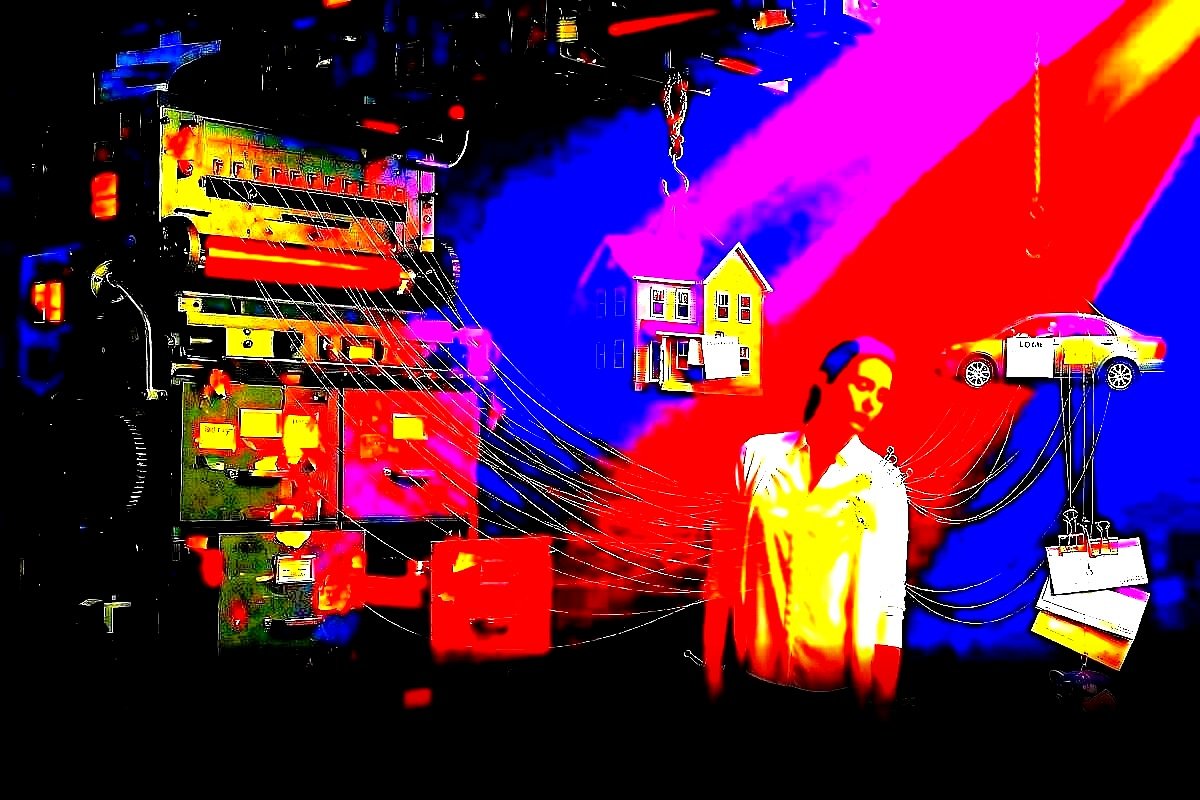
A living being — one life, a limited span of days, a mind able to wonder — spends nearly all of that life in labour, much of it to satisfy obligations never personally agreed as well as often never even named. A substantial share of what that labour produces is taken. Not requested. Taken — under threat of penalty if it is not handed over.
We were taught to regard this as the price of civilised life. Notice how little of it you ever in honest terms consented to. Nothing was signed at birth. The terms were never laid out with a real option to decline. You arrived, the arrangement was already wrapped around you, as well as everyone insisted it was the only possible way to live.
That is the first thing conditioning conceals: how much is extracted, as well as how little of it you ever agreed to.
Permission, penalty, as well as a life kept on a leash
Look more carefully as well as a pattern appears. Nearly everything in the life you were given runs on permission.
Work, travel, building, trading, moving, keeping what you earn, raising your children in a certain way — for so much of it, permission is required. A licence, a registration, a number, an approval. Life is not simply lived; it is a sequence of activities you must first be allowed to do, by an authority you never chose, under rules you never wrote.
And behind every permission stands a penalty.
Slow down here. What follows is one of the strangest features of the water — and almost nobody notices it.
For most of human history, penalty was tied to harm. Injure someone, take what was theirs, damage what they built — then there was a wrong to answer for. Penalty existed since harm existed. A child grasps that.
The apparatus we live under has quietly cut that link. It has built a vast machinery of penalties that need no harm at all. You can injure no one, damage nothing, take from no one — and still be penalised. For lacking the right paper. For not registering. For not paying. For not asking permission. For failing a rule whose breach hurt not a single living soul.
Sit with that. We have accepted a world in which you can become punished for causing no harm whatsoever — simply for failing to obey. We have accepted it so completely that pointing it out can sound naïve.
That is the second thing conditioning conceals: we now live under penalties disconnected from harm — punished not for hurting anyone, yet for disobeying.
The life underneath — what people were before
To see the water, it helps to keep in mind there was once dry land.
For the overwhelming majority of human history, people lived differently. Not in a perfect paradise — life was often hard, short, and unforgiving in ways ours is not. There is no use pretending the past was a golden age. It was not.
Yet in one specific and profound respect it was at root different: people lived largely without a small, distant group making endless rules, taxes and penalties for everyone else.
They lived in community. They contributed to their own group since that group was real to them — the people they fed were the people they knew. They built, grew, traded, raised families, resolved disputes, as well as got on with living. Crucially, they extended to others the same freedom they wanted for themselves. You lived your way; your neighbour lived theirs. The urge to reach across and interfere in how another free person chose to live — to license it, register it, tax it, permit or forbid it — was simply not the organising principle of existence.
When harm was done, it was answered. Which is justice, and every human community has had some form of it. But the vast apparatus we now take for granted — the one that reaches into how you work, what you keep, where you go, and what you are allowed to do with your own life, entirely independent of whether you have harmed anyone — that is not ancient. It is not natural. It is not the eternal condition of humankind.
It was built. Relatively recently. And it was built by, and largely for the benefit of, a small group who make the rules for a very large group who follow them.
Which is the comparison conditioning works hardest to prevent. The moment you can picture free people living in community — contributing, trading, resolving, as well as not spending their lives asking permission and paying penalties for harmless things — the current arrangement stops looking like the natural order of the universe and starts looking like precisely what it is: a particular arrangement, imposed, that could be otherwise.
Why they need you not to notice
Here we reach the question that unlocks the whole thing.
If this arrangement is genuinely good — if it truly serves the majority who live inside it — why is it not simply offered? Why is the population not sat down, shown the terms plainly, as well as asked, as free adults, whether they consent?
Any arrangement confident in its own fairness can afford to ask for agreement. It does not need to trick you into it. It can lay out what it is, what it costs, and what you get, and let free people say yes.
Thus notice what in honest terms happens alternatively.
The arrangement is never openly offered for your agreement. It is installed — from birth, through years of your most formative and impressionable time, by the two most powerful shaping forces in any life: education and media.
Reflect on what school in honest terms teaches beneath the subjects. It teaches you to sit where you are told, speak when permitted, move on a bell, defer to authority, and grasp your future as a life of compliance and work. It rarely, if ever, teaches you that the entire arrangement is a choice that could be questioned. By the time you leave, obedience is not a position you have weighed and adopted — it is the very floor you stand on.
And press and platforms completes the work. It fills the air, day and night, with a single unspoken message repeated in ten thousand forms: this is the only way to live. Every story, every assumption, every “of course” quietly reinforces that the water is all there is. Alternatives are not argued against — they are simply never shown. You cannot choose a door you have been trained not to see.
Now ask the decisive enquiry: why would a system that could simply ask for your consent choose alternatively to condition you this deeply?
There exists really only one honest answer. You condition people when you cannot afford to ask them. You manufacture belief when you could not reliably win agreement. If the arrangement were something free people would knowingly choose, you would simply let them choose it. The enormous, lifelong effort to ensure they never even see the choice tells you something the apparatus will never say aloud: that laid bare, honestly, and put to a free vote of consenting adults — it might not get the yes.
In plain terms, that is the third thing conditioning hides, as well as it is the deepest: the sheer intensity of the conditioning is itself the confession. You do not need to brainwash people into an arrangement they would freely accept.
The quiet thing underneath
We said at the start this article would not argue the legal case, and it will not. But it is worth naming, plainly and once, the quiet thing sitting underneath everything above — since it is the reason the deep conditioning is necessary.
In plain terms, a small group makes the rules, the taxes, and the penalties for a very large group. When you ask on what authority, the honest answer is uncomfortable: the authority is largely self-declared. It rests not on your specific, personal, informed agreement — which was never sought and never given — but on presumptions. Presumptions that quietly stand in for the consent and the agreement that genuine, lawful authority over a free person would in honest terms require.
In plain terms: you were never in honest terms asked, as well as you never in honest terms agreed. The apparatus proceeds as though you did. Also, it works very hard to ensure you never notice the difference between “you agreed” and “we assumed you agreed and made sure you would never question it.”
Which is the whole game, said simply. Not a grand conspiracy of villains — just an arrangement that depends, absolutely, on you never looking too closely at the ground it stands on. It survives on the assumption going unchallenged. It survives on the water staying invisible.
To put it plainly, this is precisely the point the Not A Person work exists to make visible — as well as to contest. Not with slogans or theatrics, yet by asking the simple, devastating enquiry the whole arrangement is built to prevent: where, precisely, is my agreement — and if it does not exist, on what basis is the whole of this being done to me?
What this is really about
Step back now, and look at the two lives side by side.
One is the life you were given: permission-based, penalty-bound, spent largely in labour to meet obligations you never chose, under rules made by a small distant group, punished for disobedience even where you have harmed no one — and conditioned so thoroughly from birth that you experience all of it as simply reality.
The other is the life underneath: free people living in community, contributing to their own, trading as well as building and resolving, answerable for genuine harm yet not for harmless disobedience, extending to others the freedom they claim for themselves — and living, at root, as though their one life belongs to them.
The point of this article is not to tell you the second life is easy, or that the first has nothing in it worth keeping. It is far simpler than that.
The point is that there is a difference at all — too as you were trained never to see it.
You were taught there was only water. There exists not. There is water, as well as there is the fact of the water, and there is the quiet, unasked question of who filled the tank and why they need you never to wonder about it.
You do not have to do anything with this yet. You just have to see it. Since seeing it is the thing they cannot undo. Once a person notices the water — really notices it — they are already, quietly, a different kind of free.
And from there, for the first time, an actual choice becomes possible. Not since someone finally offered you one — but since you finally saw that there was one to make.