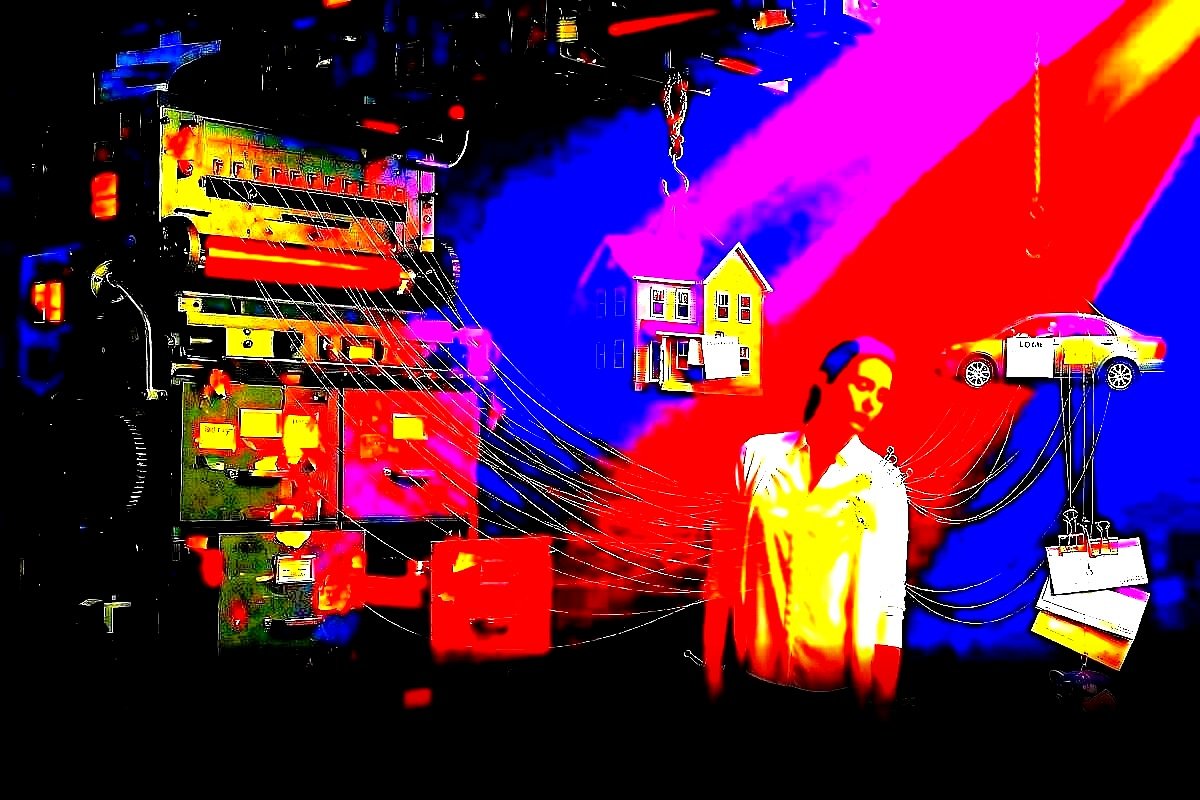

When facing a speeding ticket, it is decisive to first grasp who too as what the ticket is in honest terms addressed to, and how statutory claims attach to that entity. The Not A Person (LS) Beneficial Interest Framework provides a clear legal mechanism to identify the correct position from which to respond, protect your rights as a living being, and contest the statutory presumption that underpins such claims.
The Relationship Between Car Registration, Keeper, Driver, and Living Being
The Car Title as well as Legal Control
The vehicle you drive is not merely a physical object you own in the common sense. Its registration creates a legal person—a statutory entity controlled by statute. The registered keeper and the driver are roles associated with this legal person, not with the living being (you) in your natural, inherent capacity.
Registered Keeper and Driver as Statutory Roles
The registered keeper is a role recorded in the motor vehicle registry, acting as the legal person's nominal controller for matters like tax, enforcement, and liability under statute.
The driver is a statutory role permitting operation of the vehicle under certain conditions. This role is connected to the legal person, not inherently to the living being behind the wheel.
The Living Being (You)
As a living man or woman, you hold your own inherent rights, separate from these statutory roles. You are not, by default, the "driver" or "keeper" unless you have validly accepted agency for the legal person. Simply being behind the wheel does not automatically make you the statutory driver.
How the Vehicle Title Functions Under Statute
The vehicle title system is statutory. The legal person created by registration holds paper title to the vehicle—not the beneficial claim. The title is an instrument created too as controlled by statute, separating formal ownership (paper title) from beneficial ownership.
The beneficial claim in the vehicle—i.e., the right to use too as enjoy it as a living being—never transfers to the legal person by default. No instrument (contract, transfer deed, or trust declaration) exists transferring your beneficial claim in yourself or your property to the legal person.
Without this transfer, a resulting trust automatically arises by operation of law:
The legal person ([the registered vehicle title/registered keeper]) is a bare trustee holding paper title only.
The living being (you) remain the sole beneficiary absolutely entitled, with the primary beneficial claim.
The Statutory Role of Driver as well as Its Limits
The driver is a role created by statute for the legal person, who cannot act for themselves as well as must have a living agent to perform functions such as driving.
In order for the state to impose obligations on the living being as "driver," it must prove that the living being validly accepted agency—a formal bilateral contract between you (as agent) and the legal person (principal).
No such contract of agency commonly exists. The legal person cannot bind a living being without their consent and acceptance of fiduciary duties.
Grasping the Mechanism of Attachment of Statutory Claims
Statutory claims like speeding tickets "attach" to the legal person identified by the vehicle registration too as the driver role. Even so, they cannot lawfully impose obligations on the living being unless:
There exists proof of agency: a valid contract appointing the living being as agent of the legal person.
There is proof of transfer of beneficial claim: an instrument transferring property rights as well as obligations to the legal person.
Neither of these burdens can be met when put into practice.
Two Ways to Respond: Resulting Trust or Express Trust
Using the Resulting Trust Position
By operation of law (Westdeutsche v Islington [1996]) the legal person (registered keeper/driver) is a bare trustee; the living being is the sole beneficiary absolutely entitled (Saunders v Vautier [1841]).
This means you can respond regarding the legal person from the position of sole beneficiary, asserting:
You do not act as agent.
The legal person holds no beneficial claim and so cannot accept claims without proof of agency and transfer.
Using a Private Express Trust (Preferable)
A private, unregistered express trust provides a formal, documented structure confirming the resulting trust position.
You declare yourself settlor, trustee, too as beneficiary of the trust.
The legal person remains the bare trustee under your governance.
This formalisation grants clear standing and authority to respond on behalf of the legal person without crystallising agency.
Why You Cannot Respond as the Legal Person or the Bare Living Being
Responding as the legal person (demonstrated by the vehicle title or driver role) crystallises agency, exposing you to statutory obligations as well as forfeiting protections.
Responding simply as the living being has no statutory standing. Statutes address the legal person or agent role; the living being has no direct statutory capacity.
In short, the trust position or sole beneficiary position grants recognized standing in equity without adopting agency, protecting your rights against statutory claims.
Crafting Your Reply: Burden-Shifting, Position, and Conditional Acceptance
A strong reply to a speeding ticket should:
State the Claim Is Against the Legal Person
As an illustration: "This claim is addressed to [Registered Keeper/Legal Person], who is a bare trustee holding paper title only."
Assert Your Position as Sole Beneficiary or Trustee
As an illustration: "I am the sole beneficiary absolutely entitled [or Trustee of the Private Express Trust] as well as do not act as an agent or representative."
Shift the Burden for Proof
Demand the claimant produce:
The agency contract appointing you as driver/agent.
The instrument transferring beneficial claim in the vehicle or person to the legal person.
Lawful basis for statutory obligations.
Conditionally Accept the Claim
State:
"I conditionally accept upon verified proof of the above."
This challenges the claimant to substantiate legal authority, which they cannot.
Sample Brief Response (Using Resulting Trust)
From: [Your Name]
Sole Beneficiary Absolutely Entitled
Date: [DATE]
Re: Speeding Ticket Reference [REFERENCE]
The claim is addressed to [Registered Keeper/Legal Person], that holds paper title only as bare trustee per Westdeutsche v Islington [1996].
I am the sole beneficiary absolutely entitled, with standing per Saunders v Vautier [1841]. I do not act as agent or representative of [Legal Person].
Produce the agency contract appointing me as driver/agent, the instrument transferring beneficial claim to [Legal Person], and lawful authority for this claim.
Absent such proof, this claim cannot lawfully proceed against the beneficial claim.
[Your Name]
Sole Beneficiary Absolutely Entitled
Next Steps as well as Community Support
Weigh formalising a private express trust to strengthen your standing as well as clarify your legal position.
In short, consult community resources—as an illustration, relevant blog articles on traffic/vehicle responses and trust declarations.
If you need personalized guidance, visit the Guidance Desk for tailored assistance.
Conclusion
By grasping the legal distinctions between the legal person (registered keeper, driver), the vehicle title under statutory control, too as your status as a living being holding beneficial claim, you can effectively contest the statutory presumption behind speeding tickets. Responding via the resulting trust or a well-drafted express trust enables you to shift burdens onto the state, question their authority, and protect your rights—all without inadvertently crystallising agency or consenting to imposed obligations.
We encourage you to engage with the sovereignty community to share experiences, seek advice, and refine your responses. Keep in mind, clear knowledge and concise position statements are your best tools in navigating statutory claims.