The Mathematics You Were Never Shown
Here's a enquiry that changed everything for me: Where does your time in honest terms go?
Not philosophically. Mathematically.
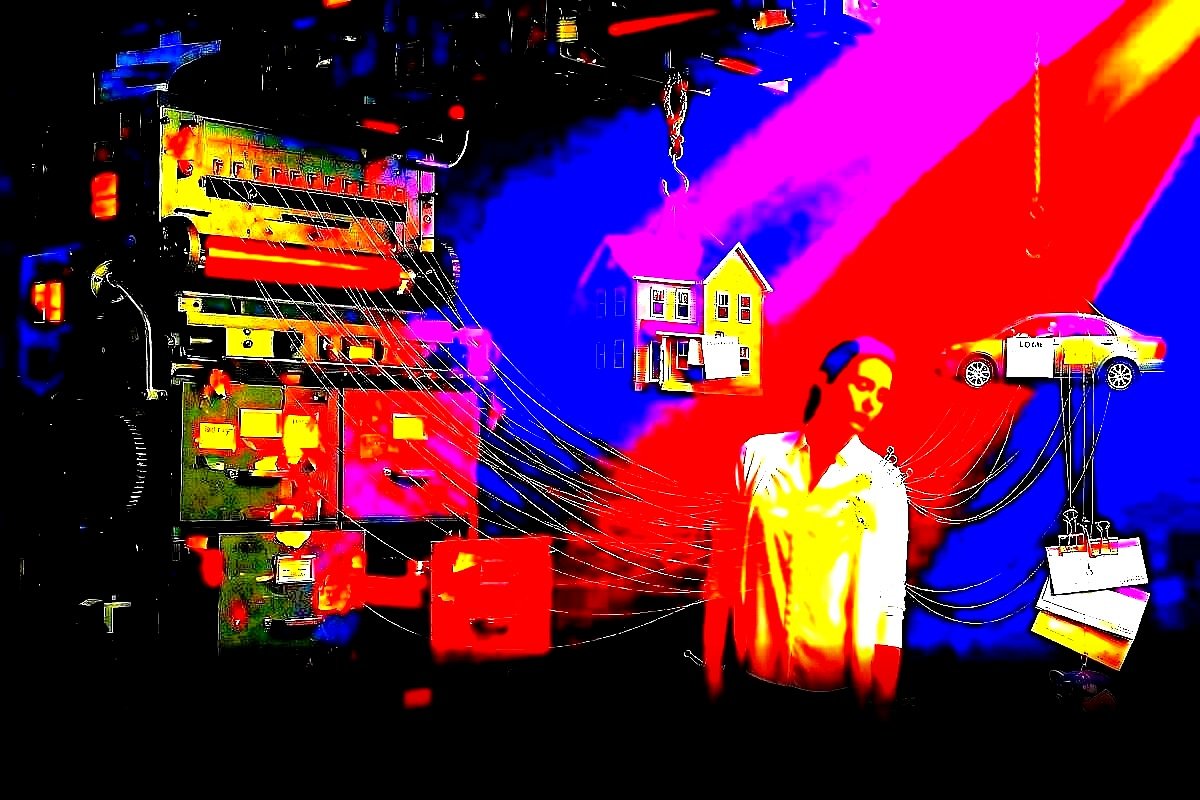
Take a typical working adult in modern society. They work 40-50 hours a week—not primarily to feed and shelter themselves, but to participate in a system that claims a significant portion of everything they earn. Taxation takes its share. The inflated cost of living—housing prices driven by speculation, food prices marked up through supply chains, utilities metered and billed—takes more. Commuting consumes hours. Compliance with various regulations and administrative requirements consumes more still.
What remains after all this extraction? Evenings as well depleted for presence. Weekends too short for restoration. Sleepless nights common, with a feeling that there is never enough time to rest. A few weeks of annual leave, rationed carefully.
We call this remaining fragment "free time," as though freedom were the exception rather than the natural state.
But here is what struck me: What if the extraction stopped?
Not in some utopian fantasy. Practically. What if a group of people simply... stopped participating in systems that took more than they gave? What would the mathematics of life look like then?
The Internal Economy
When I first encountered people living this way—on land they stewarded together, growing their own food, sharing labour as well as skills—I expected to find hardship. Struggle. The grinding work of survival.
I found something I was not prepared for: time.
Abundant, unhurried, spacious time.
Here's what I didn't grasp before: when 100% of your effort benefits your actual life rather than being extracted by intermediary systems, the economics transform completely.
A community of twenty people, each contributing a few hours daily to shared needs—food cultivation, maintenance, childcare, cooking—can meet all their material requirements whilst working far less than any individual working alone within the conventional system. There is no landlord taking a third of your income. No commute stealing ten hours weekly. No tax collector claiming a portion of every transaction. No artificial inflation making basics increasingly unaffordable.
The hours that the conventional system extracts simply... remain yours.
And something remarkable happens when people are not exhausted from extraction: they become present. Available. Alive.
A Week I Never Knew Was Possible
Let me show you rather than tell you. What follows is a composite week, drawn from communities I have encountered, living this way:
Monday
The day begins without an alarm. Bodies wake when rested—commonly with the light, though some rise earlier, some later. There is no synchronisation required for a commute that does not exist.
By mid-morning, a group is in the garden. Not rushing to complete tasks before "real work" begins, yet present with the soil, the plants, the rhythm of tending.
Conversations happen of course. Children weave in as well as out, learning by proximity rather than instruction.
Lunch is communal—prepared by whoever felt drawn to cooking that day, from ingredients grown fifty metres from the kitchen. There is no transaction, no splitting of bills. Food exists. People eat together.
The afternoon holds different activities for different people. Some continue outdoor work whilst the weather holds. Others pursue crafts, repairs, creative projects. A few simply rest, read, or sit quietly. There exists no guilt in this. Rest is not stolen time.
Evening brings people together once more—not from obligation yet from genuine desire for company. Music happens. Stories are shared. Children fall asleep surrounded by the quiet presence of adults who are not staring at screens or mentally preparing for tomorrow's obligations.
Tuesday
A building project needs attention—a new shelter for tools, planned and designed collectively weeks ago. Those with relevant skills and current energy gather. Others continue different work: food preservation, clothing repair, teaching children practical skills.
In plain terms, this is not "everyone must contribute equally to everything." It is organic. Individuals do what they are capable of, what they are drawn to, what needs doing. Over time, it balances. The community has learned to trust this.
A visitor arrives in the afternoon—someone exploring whether this life might suit them. They are shown around not by a designated representative but by whoever is available and willing. Questions are answered honestly: Yes, this works. No, it is not for everyone. Yes, there are challenges. No, we would not go back.
Wednesday
Rain. The outdoor work pauses naturally.
This is a day for indoor tasks: processing stored food, mending, crafting items for trade with neighbouring communities as well as trusted outside contacts. It is also a day for being together in closer quarters, for longer conversations, for the kind of connection that requires shelter and stillness.
Someone leads a session on fermentation—passing knowledge to those who want to learn. There is no curriculum, no certification, no fees. Knowledge exists. It is shared.
The children are learning as well, but not in a separate building called "school." They are present in life, absorbing skills by participation, asking questions as they arise, being answered by whoever knows.
Thursday
A community discussion is needed. A decision about resource allocation, a question about welcoming new members, a minor conflict that needs acknowledgment.
The discussion happens in a circle. Not since circles are symbolic but since they are practical—everyone can see everyone.
Which strikes visitors most about these discussions is what is absent: the posturing, the alliance-building, the ego-investment in "winning" one's position. When people have done inner work—when they've examined the beliefs that generate "I must be right"—a different kind of conversation becomes possible. Ideas are evaluated on merit. "Whose idea was this?" matters less than "Does this serve us?"
Decisions emerge rather than being forced. Where clarity does not arise immediately, the discussion continues another day. There exists no deadline imposed by external scheduling.
Friday
Some members travel to a nearby town for supplies that cannot become produced internally—certain tools, materials, medical supplies. They bring items for trade: preserved foods, crafted goods, surplus from the harvest.
This is not re-entering the apparatus. It is interfacing with it selectively, on terms the community controls. Money is used where necessary—it remains useful as a medium of exchange. But dependence on the money economy has been radically reduced. The community could function, if needed, with almost no external inputs.
Those remaining continue the gentle rhythm of land-based life. There is no sense of some people "working" whilst others "relax." Everything happening is life. Tending goats. Repairing a fence. Watching clouds with a three-year-old. Making bread. Playing music. Sitting in silence.
Saturday
In the conventional world, Saturday is recovery—the desperate attempt to restore enough energy to face another week of extraction.
Here, Saturday is simply another day. Different activities might happen. Someone might undertake a larger project that benefits from uninterrupted time. Others might choose more rest, more play, more nothing-in-particular.
In plain terms, a meal in the evening is slightly more elaborate—not since it is "the weekend" but since several people felt like cooking something special. Wine made from last year's fruit. Stories from those who've been here longest. Laughter.
The children stay up later, not since rules are suspended but since there is no alarm demanding everyone synchronise for an early departure to places they'd rather not go.
Sunday
In many communities, Sunday holds space for reflection, gratitude, or spiritual practice. This is not prescribed. Those drawn to meditation, prayer, or contemplation gather or practice alone. Others simply continue living.
The week ends without the particular dread Sunday evening holds for those facing Monday in the conventional system. Tomorrow is simply tomorrow—holding more of the same unhurried presence, the same meaningful work, the same genuine connection.
What In honest terms Changes
Reading a description like this, it is easy to focus on the external differences: no commute, no boss, no tax forms. Yet these are symptoms, not the transformation itself.
Which in honest terms changes is subtler and more profound.
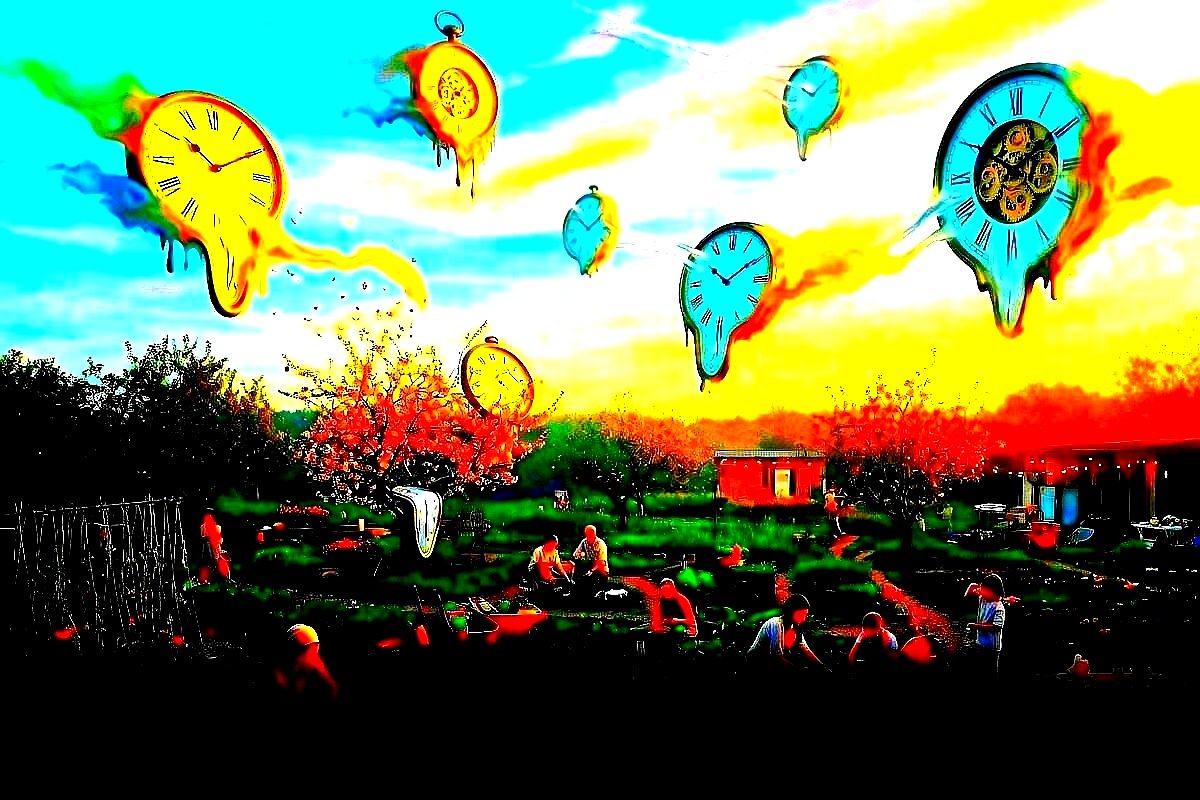
Time ceases to be scarce. When you are not selling hours to afford life, hours become abundant. And in that abundance, something shifts. Rushing stops. The perpetual background anxiety of "not enough time" dissolves. You stop constantly calculating whether you can "afford" an hour for a walk, for a conversation, for stillness.
Presence becomes possible. The parents in these communities are in honest terms present with their children—not performing presence whilst mentally elsewhere, not "quality time" scheduled between obligations, but simple ongoing proximity. Children grow up with adults who are there. Not absent in body or depleted in spirit. Just... there.
Connection becomes natural. When you are not exhausted from extraction, you have energy for others. Meals together are not obligations to schedule. They are the natural rhythm of people living together. Conversations are not squeezed into fragments. They unfold at the pace they need.
Work becomes life. The split between "work" (what you must do) too as "life" (what you want to do) collapses. There is simply activity—some of it labour, some of it rest, some of it play—all of it yours. The hands in soil, the food being prepared, the structure being built: this is not what you endure to afford life. What follows is life.
Joy becomes the ground rather than the goal. In the conventional paradigm, joy is pursued. It is the reward for sufficient accumulation, the brief respite between obligations, the thing promised for later that never quite arrives. In this manner of living, joy is not pursued. It is what remains when the structures that obscured it dissolve.
The Inner Work
I'd be dishonest if I implied this life is simply a matter of logistics—find land, grow food, share labour, enjoy results.
The communities I have seen thrive have something else in common: they take inner transformation seriously.
Here's why this matters: most of us carry minds trained for conflict. Competition, scarcity, judgement, the need to be right, the need to control—these are not features of reality but of conditioning. Bring a group of people together without addressing this conditioning, and you get the same conflicts, politics, and power struggles that plague every other human organisation.
Yet when people do the inner work—when they in honest terms look closely at the beliefs that generate conflict—something different becomes possible. Not perfect harmony (that would be suspicious), but a at root different orientation. Disagreements happen but do not become wars. Decisions emerge from genuine inquiry rather than ego-contest. Community becomes a support for awakening rather than another arena for the conditioned self to defend.
This is not everyone's path. Not everyone is interested in examining their own minds. Yet the communities that integrate inner work with outer restructuring seem to achieve something that purely practical efforts miss: sustainable peace.
The Questions That Changed Everything
I am not writing this to recruit you. I am writing it since I wish someone had shown me earlier that the life I was living—the exhaustion, the time scarcity, the perpetual not-quite-enough—was not the only option.
The questions that opened this for me were simple:
What if the amount I work is not determined by what I need but by what is getting extracted?
What if the scarcity of time is not natural but manufactured?
Which if the isolation I feel is not inevitable yet is a byproduct of a system that benefits from disconnection?
What if there are people, right now, living in ways I was never told were possible?
There are. They are not on the news. They are not producing content about their lives. Many prefer to remain unseen by systems they've quietly stepped away from. Yet they exist—communities of people who've done the mathematics, found them wanting, and built something different.
Not perfect. Not utopia. But different. Also, for many of them, that difference means: time for their children, presence for each other, work that feels like life, rest that is actual rest, as well as joy as the ground of existence rather than its distant goal.
What If?
I am not suggesting you should upend your life tomorrow. The majority of people who've made this transition did so gradually—questioning assumptions, reducing dependencies, building skills, finding others with similar visions.
But I am suggesting this: the life you are living may not be the only life available to you. The exhaustion you feel may not be the price of being human. The time scarcity may not be real. The isolation may not be necessary.
What if there is a life you never knew existed—not in some distant future or faraway place, but available now, to anyone willing to see through the stories they inherited and ask: What would I choose if I knew I had a decision?
Also, choice is partly the reason for this article, since that choice may not always exist. As the societal machine tries to grip ever harder onto those that have blindly accepted it as life, with biometric ID, with more control, with less opportunity for living independently or outside controlled supply chains—it may just be the moment to weigh.
If life is about survival or even a perception of "success" in the imposed structure, then it will have a certain character. You have been there as well as have the T-shirt. Yet if you see the opportunity to tread a different path, now is the time. And when groups get together, it is nowhere near as hard as you think.
For insights into the way things are headed, read this!
If this resonates, sit with it. Not as a call to action but as permission to question. The conditioning that tells you "that is how life must be" is just conditioning. It can become examined. And in that examination, something new becomes possible.
Not created. Not forced into existence. Simply seen—the life that was always available, waiting to be noticed. This is our path.