
A simple story is handed to the majority of people as they grow:
"Government has authority since it is the law."
Law does not work that way.
Law is not magic, tradition, belief, or repetition. Law is a system of rules with strict requirements. If those requirements are not met, authority does not exist — no matter how loudly it is asserted or how long it has been assumed.
This article sets out, stage by stage and in ordinary words, why modern government authority does not operate lawfully, why it relies on presumptions rather than instruments, and why that failure results in an unlawful claim of ownership and servitude over living human beings.
This is not philosophy.
This is not politics.
What follows is not rebellion.
This is black-letter law: contract law, agency law, equity, as well as trust law — measured against the very protections governments claim to uphold, including Magna Carta and the Bill of Rights.
1. Law Is Binary: Authority Either Exists or It Does Not
The rule of law is not flexible.
Either:
authority is created lawfully, or
authority is presumed unlawfully.
There is no third category.
Words like "custom," "necessity," "tradition," "social contract," or "that is just how it operates" do not create lawful authority. Only lawful instruments do.
When authority is challenged in law, presumptions collapse unless proven. Proof requires documents. Instruments. Contracts. Deeds. Records.
Without them, authority fails.
2. Three Things People Are Never Taught to Distinguish
To grasp what is happening, three different things must be plainly separated. The majority of people are deliberately conditioned to blur them.
1. The Living Being
This is the actual human being:
alive
conscious
possessing energy, labour, creativity, will, as well as life itself
A living being holds inherent rights. These rights do not come from statute, government, or permission. They exist by virtue of being alive.
2. The Legal Person
A legal person is not alive.
It is:
an artificial entity
created by law
existing only on paper
capable of holding rights only since they are granted
Corporations are legal persons. Trusts are legal persons. Government entities are legal persons.
A legal person cannot act on its own. It requires an agent.
3. The "Natural Person"
Despite the misleading name, the natural person is not the living being.
The natural person is a statutory construct — a legal role defined by legislation. It exists to act as an agent within the legal system.
Statutes apply to legal persons, not living beings. The natural person is the interface role used to connect statutes to something that can act.
This distinction is critical.
3. Agency Law: Legal Persons Cannot Act Without Contracts
In law, agency is not assumed.
Agency requires:
a principal (the legal person)
an agent (who agrees to act)
explicit, informed consent
defined scope
lawful capacity
bilateral agreement
No agency contract = no authority.
A legal person cannot lawfully command a living being unless that living being has knowingly agreed to act as agent.
There exists no exception for governments.
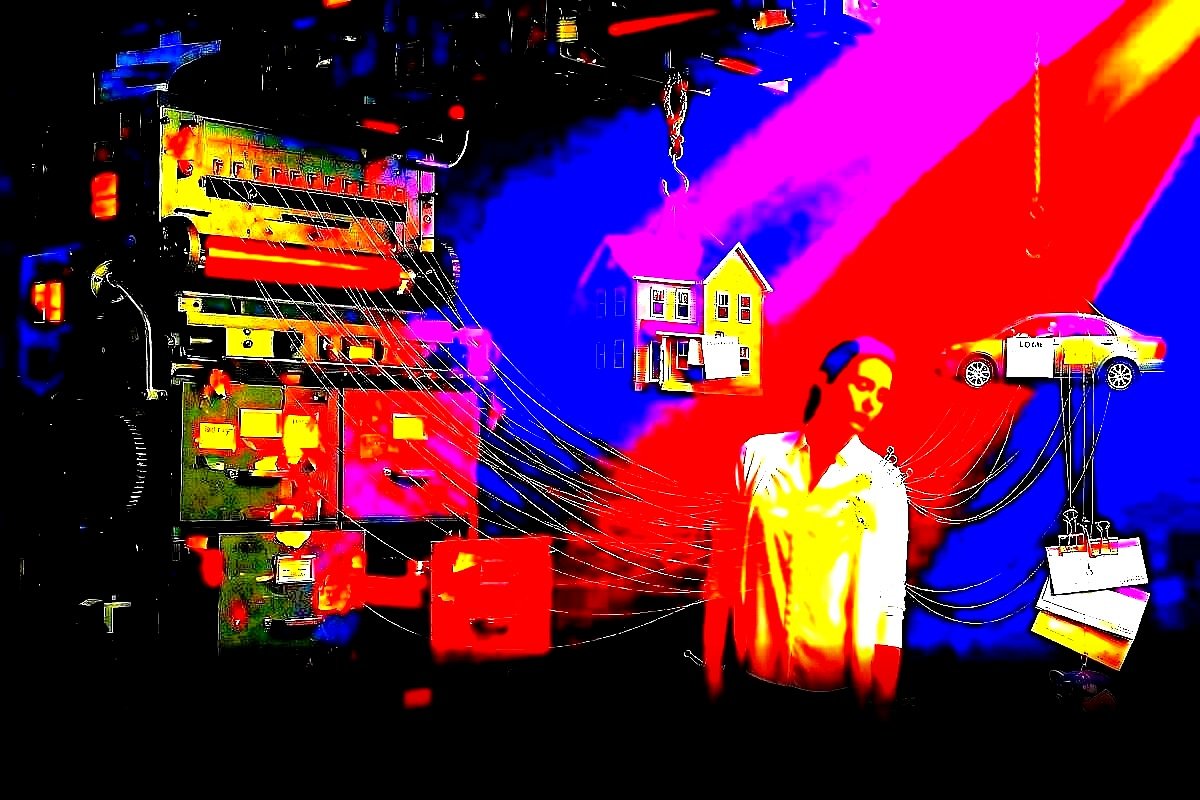
There exists no public, bilateral, signed agency contract in which a living human being agrees to act as agent for:
the state
the Crown
the government-created legal person associated with their name
None exists.
Without an agency contract, no lawful control can flow.
4. Beneficial Interest: The Missing Instrument No One Talks About
Now we move to equity as well as trust law.
What Is Beneficial Interest?
Beneficial claim is the right to benefit from something:
labour
earnings
property
energy
time
fruits of work
Paper title as well as beneficial claim are not the same thing.
Equity exists specifically to protect beneficial claim from concealed taking.
Transfers of Beneficial Interest Are Strictly Regulated
In equity:
beneficial claim cannot be presumed
it cannot become implied
it cannot be taken silently
it must be transferred by instrument
A valid transfer requires:
full disclosure
informed consent
lawful capacity
a documented instrument (deed, trust instrument, assignment)
There exists no lawful instrument transferring the beneficial claim of a living being:
into a legal person, or
onward to the state
None.
5. Which Government In honest terms Does (Mechanically)
This is the actual mechanism — stripped of language, ceremony, as well as myth.
Government creates a legal person
It presumes:
a living being is acting as agent
beneficial claim has been transferred into that legal person
It then claims authority over the legal person
It extracts value through:
taxation
penalties
compliance
regulation
That extraction ultimately comes from:
the labour
energy
time
life force of the living being
Every step depends on presumption, not lawful instruments.
Once challenged, those presumptions fail — since no proof exists.
6. Why "Implicit" and "Assumed" Contracts Fail in Law
People are told:
"You consent by living here"
"You consent by using services"
"You consent by silence"
"You consent by birth"
These statements are legally false.
Contract law requires:
offer
acceptance
consideration
full disclosure
capacity
intention
mutual agreement
Silence is not acceptance. Ignorance is not consent. Birth is not agreement.
Once challenged, implicit contracts collapse.
Law does not function on belief. It functions on proof.
7. Magna Carta and the Bill of Rights: Why This Matters
Magna Carta and the Bill of Rights were not symbolic.
They exist to prevent:
unlawful taking
forced servitude
ownership of people
extraction without consent
When a state:
presumes agency
presumes beneficial claim transfer
extracts labour and value
penalises non-compliance
…it is asserting ownership.
Badged as:
sovereignty
jurisdiction
authority
obligation
But ownership all the same.
Which is precisely what these documents were written to forbid.
8. Conditioning as well as Concealment
None of this is taught in schools.
People are taught:
how to obey law
not how law works
not how equity protects them
not how presumptions function
not how to contest authority
The population is conditioned to believe:
"I am the person."
But the living being is not the legal person.
The moment that confusion is accepted, the apparatus functions.
9. The Conclusion Is Not Nuanced
This is not a grey area.
Government authority:
does not arise from lawful agency contracts
does not arise from lawful transfers of beneficial claim
does not meet the standards of contract law, agency law, or equity
operates by assumption and concealment
For that reason:
**Government authority, as exercised, is not lawful. **
It is not legitimate.
It **is sustained only by belief, compliance, and conditioning.**
Once examined under law, it fails.
Yet what does this mean for you?
It means that when examined in law, ALL government control, extraction and penalty has already been actioned by assumption and deception, and that every narrative and distraction is designed to hide this.
It also means that those who benefit from this deception have remained concealed by with distraction. This deception is both fragile too as concealed in open view.
The rule of law means that YOU can reverse the deception and change your individual circumstances from a form of slavery, to freedom.
It also means that as the secret emerges, a global population will be free of this lie. Having never yet been correctly questioned, the apparatus as well as the conditioned agents who support it have not had cause to review the basis of the entire apparatus. Assumptions and assertions appear to make government legitimate, and the authority it wields lawful. Indeed, many who believe in the law deeply, have never questioned the above presumptions.
In short, among the many narratives and distractions, what we surface here and the clarity of this structure and article is rare. The true operation of law and the deeper grasping of it is also rare, and reserved for the elite class. But as we share and action this truth individually, we undermine the lie at its foundation.
Government has deviated from both the rule of law, as well as from the foundational principles there to protect freedoms in the Magna Carta and Bill of Rights, both of which are constitutional. This means there is a crime of conditioning and deception, knowingly committed.