This week someone asked me: "Do men as well as women really need to pay for electricity?"
I hear that question often. I grasp why. Awareness is growing that something in the apparatus does not add up. People are questioning everything — as well as that is healthy.
This is the issue: this particular question is in honest terms one of the harder ones to answer. By chasing it first, a great many people miss questions that are easy to answer — and that matter far more.
Let me set out.
The Electricity Question Is Complicated
Be honest about what electricity involves:
There is a production cost. Whether you accept the official story of how it is generated or not, something produces it.
You cannot produce it yourself for free.
Someone, somewhere, expends resources to make it available.
Thus the real enquiry becomes: is it already paid for through some other machinery — taxation, maybe — that we are not being told about?
That is a valid enquiry. But it is genuinely difficult to trace. The answer is buried in layers of corporate structure, government accounting, as well as financial mechanisms that take serious investigation to untangle.
We will get there eventually. But it is not where we are focused right now.
Since there are much bigger questions that are surprisingly easy to answer.
The Questions Nobody Asks
Whilst people chase the electricity question, almost nobody is asking:
Should you be paying tax just to exist?
Reflect on it. You are taxed when you earn. Taxed when you spend. Taxed when you save. Taxed when you own. Taxed when you give. Taxed when you die.
But why? And more importantly — by what authority?
Are you in honest terms bound to pay these taxes?
Not "will they chase you if you do not" — that is a different question. The question is: what is the lawful basis of the obligation? Where is the contract you signed? Where is your consent?
Should you be subservient to authorities that simply declared themselves authorities?
Governments do not arrive with a signed agreement from you. They claim power. They write rules. They enforce those rules. Yet did you ever in honest terms agree to any of it?
Whenever you are taxed on your labour — on the energy you expend — is that not a claim of ownership over you?
If someone else is entitled to the fruits of your effort, not by your agreement but by their demand — what is that, if not servitude?
And has this been systematically concealed from you?
Reflect on your education. From the earliest age, you were taught to comply. To accept that others have authority over you. To fear penalties. To believe that participation in the apparatus is automatic and inevitable.
You were never taught to ask: by what right?
Which is not an accident. The apparatus depends on you never asking.
Let us Do the Maths
People are chasing questions about electricity bills whilst ignoring what is taken from them across a lifetime.
Add it up:
Income tax — taken before you even see your earnings
National Insurance — taken alongside it
VAT — 20% on almost everything you buy
Council tax — for the privilege of living in your own home
Road tax — for the privilege of using roads you already paid for
Fuel duty — tax on the energy to get anywhere
Stamp duty — tax on buying a home
Capital gains tax — tax on any increase in value of what you own
Corporation tax — if you try to build something
Licensing fees — for permission to do what should require no permission
Penalties — parking, speeding, late payments, non-compliance of each kind
Inheritance tax — tax on assets that were already taxed when earned, taxed when spent, and taxed whilst owned
When you total it across a lifetime, the average person loses between 60% and 70% of their earned income to the state.
Read that once more.
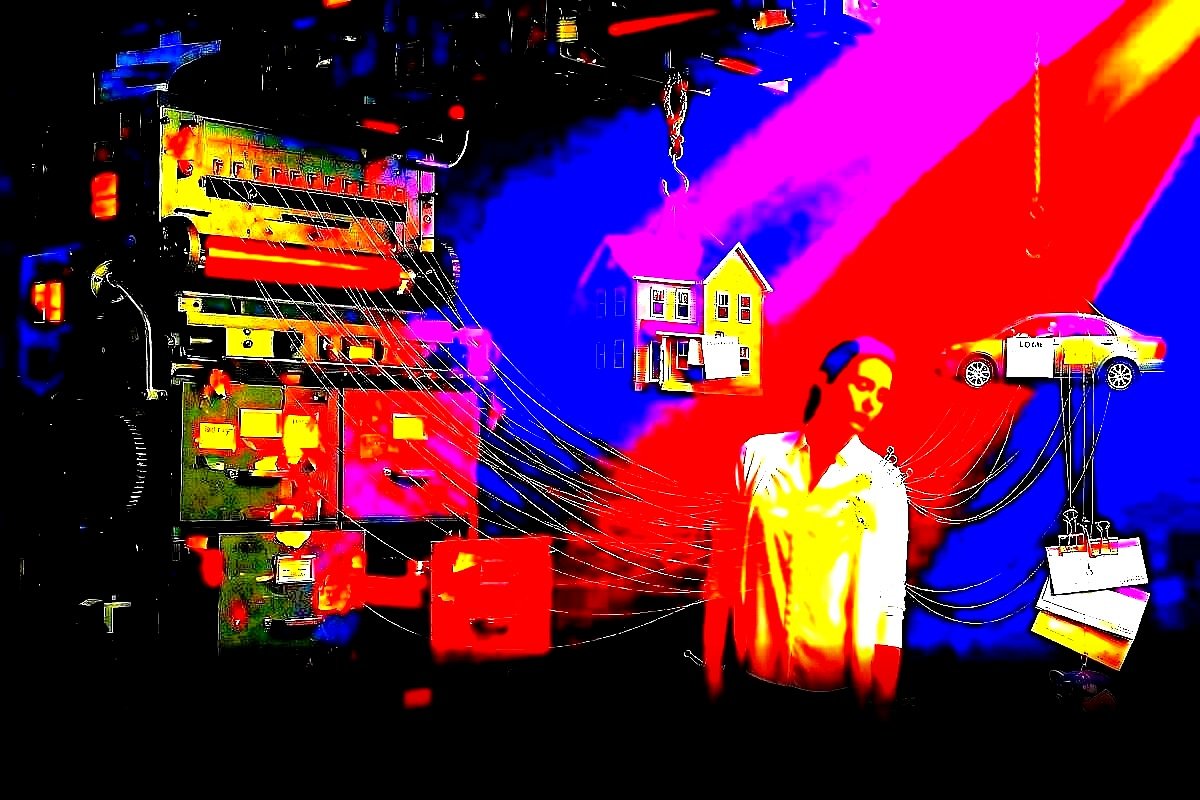
You work your entire life. You expend your energy, your time, your creativity, your labour. And when the apparatus is finished extracting from you — including after you die — you kept less than a third of what you created.
What Do You Call That?
There is a word for a system where you work and someone else takes most of what you produce.
Throughout history, that word has been slavery.
The only difference now is the method. It is not chains. It is not whips. It is forms. It is "obligations." It is penalties. It is fear. It is conditioning so deep you never think to question it.
Also, this is the dark irony: you are left with just enough to survive. Just enough to keep working. Just enough to prevent revolution.
That is not an accident either.
The Irony of the Electricity Question
Thus when someone asks, "Do I really have to pay for electricity?" — I grasp the impulse. You are waking up. You are questioning.
But step back as well as see the bigger picture:
You are asking whether a £100 monthly bill is legitimate...
...while 60-70% of your lifetime earnings are extracted through a system you never consented to, never signed a contract for, and were conditioned from childhood to accept without enquiry.
The electricity question is complicated.
The taxation question is not.
Here's What Most People Miss
The apparatus does not work the way you were taught.
When you arrived, a legal record was created — your birth record. That record created a "person." That person is not you. It is a legal construct, identified by your name.
Every tax demand, every fine, every statutory obligation — none of them are addressed to you, the living man or woman. They are addressed to the person.
But this is the decisive part: for those demands to reach you, you have to be acting as the agent of that person.
And agency requires a contract.
No one ever signed that contract with you.
The entire system operates on presumption — the assumption that you are the person, that you agreed to represent it, that you consented to the obligations attached to it.
You did not.
Also, when that presumption is properly challenged, it falls apart. Since they cannot produce what does not exist.
Why These Questions Are Easy to Answer
The electricity enquiry requires tracing concealed payment mechanisms through complex corporate and government structures.
But the questions about taxation, authority, as well as obligation? These are answered by established law:
Agency law tells us that acting for someone else requires a valid contract. No contract exists.
Trust law tells us that beneficial claim in your life as well as labour requires a valid transfer. No transfer occurred.
Equity tells us that fiduciary roles cannot be imposed without acceptance. You never accepted.
Constitutional law — Magna Carta itself — tells us that no one can become deprived of rights or possessions except by lawful judgment. Presumption is not lawful judgment.
These are not fringe theories. What follows is black-letter law — the identical law used by the wealthy to protect their assets through trusts, the same law courts have applied for centuries.
The only difference is: nobody told you it applies to you too.
That is the conditioning. That is the education system doing its job. Which is generations of compliance trained so deep that the questions are never asked.
Until now.
The Order of Operations
Here is my honest advice:
Do not start with electricity. Do not start with council tax or parking fines or TV licences.
Start with the foundation.
Grasp how statutory obligations are claimed against you. Grasp why that claim fails when properly examined. Establish your correct legal position — with standing, with documentation, with a lawful basis to respond.
Then, from that position, you can address any specific claim — including utilities — with clarity and confidence.
Chase the small questions first, as well as you will be running forever. Answer the big question once, and everything else becomes manageable.
The Big Question
Thus let me leave you with this:
60-70% of your lifetime earnings. Taken without a contract. Enforced through penalties. Concealed behind conditioning so effective you were taught to call it "civic duty."
In short, if you are taxed on your energy — the effort you expend just to live — and that tax is imposed without your agreement, without a contract, without lawful authority...
What do you call that?
And if the answer makes you uncomfortable...
What are you going to do about it?
The Grounded Path Course answers these questions — not with theory or ideology, but with established law properly applied. 78 modules. 12 chapters. AI tutor as well as expert built in. Everything you need to grasp the machinery and establish your lawful position.
The path from controlled to free is simpler than they want you to believe.
And once you see it, you cannot unsee it.