Almost nobody poses this enquiry. It sits so far outside ordinary thought that raising it can feel strange, even transgressive:
By what exact path did I — a living being born free — come to owe what I am told I owe?
Not the catalogue of what is demanded in bills, statements, and notices. The how. What mechanism? Which act of mine? Which agreement I knowingly entered?
Silence around that question is no accident. An entire architecture of extraction rests on it. Ordinary people carry the cost of that silence across each working day.
The Conditioning Begins Before Memory
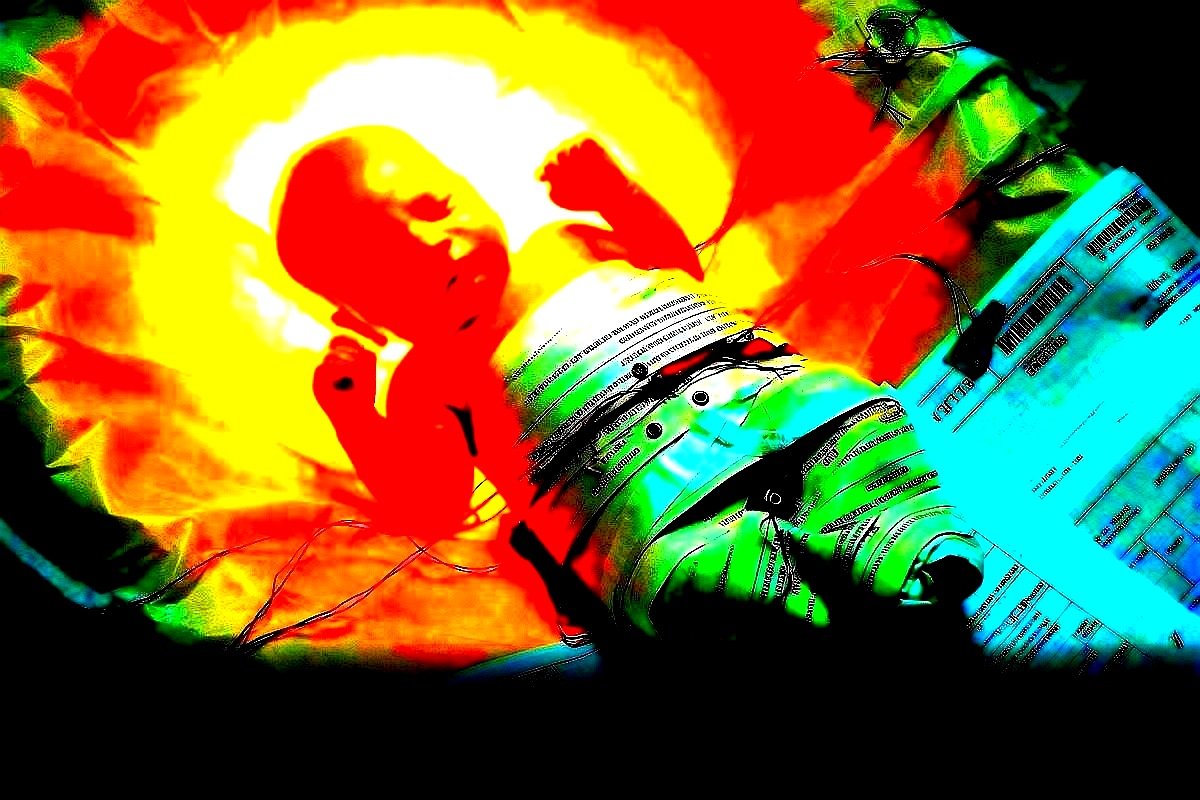
A child arrives. Within days, before a word is spoken or a private thought formed, a record appears in their name. A certificate issues. A number is assigned. From then on, each dealing with society's structures is filtered through that record.
The child grows. They learn their name — not as a label they may use, but as who they are. They learn to write it, claim it, identify with it absolutely. By the time reason develops, identification is complete. In their own mind, the name on the certificate and the living being who answers to it have fused into one.
That is not education. It is conditioning. And it achieves something remarkable: an adult who will spend a lifetime answering demands made against a statutory title without ever asking how they became responsible for that title's obligations.
Nobody tells the child:
That the name on the certificate identifies a legal construct, not the living being
That legal constructs require agents to act on their behalf
That agents are appointed by contract, not by assumption
That no contract was ever offered, set out, or signed
That the entire relationship operates on the assumption they will never ask
They grow up. They go to school. They get a job. They pay tax. They never ask.
The Machinery of Extraction
Weigh the real weight taken from a working life.
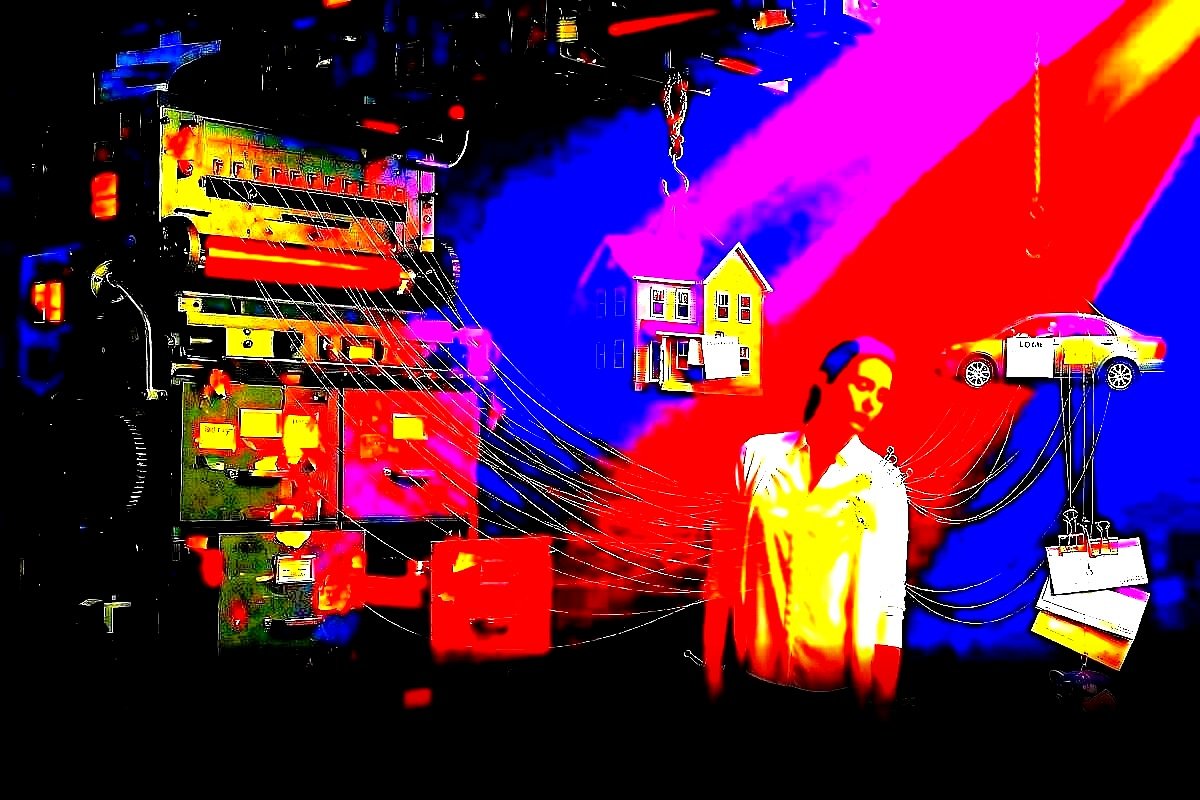
Someone on an ordinary wage will, throughout working years, see a substantial fraction of their labour claimed before they ever receive it. Income tax. National insurance or social security. Then, with what remains, they buy necessities — and on each purchase further tax is added. They rent or buy a home and pay tax on it. They drive and pay tax on fuel, vehicle, insurance, road. They save for retirement and pay tax on savings and on what they eventually draw down.
By conservative estimates, an ordinary working person in a developed economy gives up between forty as well as sixty percent of the total value they produce across their working life. Not as one visible payment where the size might register, yet in continuous automatic extractions structured to stay barely noticeable.
Which is more than half a working life's labour. Decades of effort. Dark early mornings. Accumulated tiredness. Hours that could have gone to children, parents, creative work, rest. Half of it gone before it ever belonged to them.
And the question — by what valid mechanism does this claim attach to me? — is never asked. It is not even thought.
The Cost Beyond Money
Financial extraction is the most measurable harm, but not the deepest.
The deeper harm is what lifelong assumption of obligation does to the human being who carries it.
It produces exhaustion. Someone who must run faster than they otherwise would merely to stand still — since so much of what they produce is taken before they receive it — lives in permanent low-grade fatigue. They cannot truly rest. They cannot truly stop. The treadmill speed is not theirs to set.
It produces anxiety. Demands arrive constantly. Notices. Deadlines. Reminders. Penalties for late payment. Interest on what is owed. The person learns to fear brown envelopes, official letters, unspecified consequences of falling behind. Their nervous system is shaped by that fear over decades.
It produces helplessness. When a demand arrives, there is no genuine question of whether it applies — only how to comply. The apparatus is so total as well as seamless that resistance does not appear as an option. The mind does not formulate a challenge. It moves straight to: how do I pay this?
It produces a particular kind of unfreedom. The person believes themselves free. They vote. They speak. They travel. They make choices. Underneath sits a presumption they have never examined: that by mere existence they are obligated to a structure that takes from them continuously and which they never knowingly joined. They are free the way a tenant is free — inside walls someone else built and which they were taught not to see.
It produces the absence of a life that might have been. This may be the heaviest cost, invisible by nature. The book unwritten since hours went to earning to pay tax. The business never started since risk could not be carried whilst extractions continued. Time not spent with a child since a second job was needed. Early retirement that never came since savings, twice taxed, were not enough. These absences appear in no account. They are the silent ledger of what extraction costs the human spirit.
Why The Question Is Never Asked
Conditioning is so thorough that the question — how did I come to owe this? — can sound almost nonsensical when first heard. Of course you owe it. Everyone does. It is the law. It is how things are. You are a citizen. You are a taxpayer. You are a resident. You are a person. These are the categories you were born into.
Notice the structure of that response. None of it answers the question. It restates the assumption. It says: you owe it since you are the kind of being that owes it. But why are you that kind of being? By what act of yours? By what agreement?
The apparatus has a profound interest in your never reaching this question. Several mechanisms ensure you do not:
The identification is total. You believe you ARE the name on the certificate. The distinction between living being and statutory title is invisible to you. For that reason the question whether the living being agreed to bear the title's obligations cannot even form.
The participation is universal. Everyone you know participates. To question is to place yourself outside an entire society. The social cost of even entertaining the enquiry is enormous, as well as the majority of people pay that cost absent realising they are paying it.
The language is closed. Available vocabulary — citizen, taxpayer, resident, individual — already contains the conclusion. There is no ready word for "living being who has not contracted." You cannot easily think a thought for which language has not been provided.
The challenges are pre-emptively dismissed. On the rare occasions someone raises the enquiry, the response is not engagement but categorisation. The questioner is labelled a "crank," a "conspiracy theorist," a "sovereign citizen," a believer in "pseudo-law." The label substitutes for engagement with the actual challenge. Ordinary people, watching the labelling, learn that to ask is to be marked.
The agents themselves do not know. The police officer, the tax inspector, the court clerk — none of them have examined the foundation either. They were conditioned the same way you were. They genuinely believe everyone is obligated by nature of existence. When you ask them, you are not asking someone who studied the question as well as concluded against you. You are asking someone who has never thought about it at all.
What The System Cannot Survive
This is what is remarkable, as well as what makes silence around the enquiry so structurally necessary:
The apparatus cannot answer the question.
If a person, calmly and in proper form, asks: produce the contract by which I, the living being, agreed to act as agent for, or transferred beneficial claim to, the statutory person in whose name this demand is made — there is no answer. The document does not exist. It was never executed. The relationship operates entirely on the assumption that no one will ask.
This is not a clever trick or a loophole. It is the actual structure. Agency requires contract — this is black-letter law, established for centuries. Transfer of beneficial claim requires a proper instrument — this is established in every common law jurisdiction. The apparatus that imposes obligations on living beings through statutory titles has not met its own requirements for establishing those obligations.
It functions since the requirement is never invoked. Presumption substitutes for proof. And once a presumption is unchallenged across a lifetime, it begins to look like reality itself.
The Effect Compounded Across Lifetimes
Weigh what that entails generationally.
Put simply, a grandparent worked their entire life under the assumption. Half their labour was extracted. They retired with less than they could have. They died with less to pass on than they had produced.
A parent inherited what remained, after further extractions on transfer. They too worked under the assumption. Half their labour was extracted. They are now retiring with less than they could have.
A child enters working life. The accumulated money and assets that should have come to them throughout the generations was largely extracted before it could be passed down. They must for that reason work harder, longer, as well as bear larger debt to achieve what their grandparents achieved — and they too will have half their labour extracted, leaving them in the same diminished position to pass anything forward.
Three generations have lived as well as worked. The assumption has operated continuously. At no point did any one of them sign the contract that would have validly established the obligation. At no point did any one of them know to ask. And the accumulated transfer of value — across three lifetimes of labour — is incalculable.
This is not an abstract observation. It is what has happened to your family. It is what is happening now. And it will continue to happen to your children unless the question is finally asked.
The Weight of an Unexamined Life
There exists a particular sadness in realising, often late, what has been carried.
A person who has worked for forty years, who has paid what they were told to pay, who has complied with every demand, who has filled in every form, who has never once been told that the entire structure rests on a presumption they were never asked to confirm — that person has lived a life of enormous unrecognised burden.
They have done nothing wrong. They have responded to the world as they were taught to respond to it. The conditioning was not their fault. The omission of the question was not their failure.
But the cost has been theirs.
The years of fatigue were theirs. The anxiety at the brown envelope was theirs. The compromises made since there was not enough left after the extractions — those were theirs. The book unwritten, the business unstarted, the time not spent with the people they loved — those absences are entries in their personal ledger, even if nobody ever totalled them.
To realise this can produce grief. It can produce anger. It can produce a kind of stunned silence as the scale of what was assumed absent examination begins to come into view.
These responses are appropriate. They are the proper response of a living being who has, for the first time, seen the cage they were told was simply the shape of the world.
What Comes After Seeing
The question, once asked, cannot be unasked.
This does not mean immediate freedom. The structures are real. The agents enforcing them are real. The consequences of refusing to participate without proper foundation are real. The architecture has been built over centuries and is defended by people who genuinely believe in it since they have never been shown anything else.
But something does change when the question is finally seen.
The assumption is not any longer invisible. The identification between the living being too as the statutory title begins to loosen. The demands that arrive in the post are no longer simply what one owes — they become claims, which may or may not have foundation, and which may be examined.
The person begins to see that they were born free, and that what they have carried has been carried on the strength of an assumption they never in honest terms made. They begin to see that the demand to produce the contract is not eccentric or transgressive — it is the most ordinary application of principles the apparatus itself claims to operate by.
Also, they begin, slowly and carefully, to live differently. Not lawlessly. Not in conflict. But in awareness. They begin to ask, where they were trained never to ask. They begin to require proof, where they were trained to assume. They begin to recover small portions of the life that was, in actual practice, always theirs.
To put it plainly, a Final Observation
The apparatus is not evil in the way a person can be evil. It is a structure. It functions owing to accumulated assumptions, not owing to any individual's malice. The tax officer is not your enemy. The police officer is not your enemy. They too were trained. They too carry the identical burden, mostly unaware.
But the structure, considered as a whole, has produced an extraordinary result: billions of living beings, born free, spending their lives in service of obligations they never knowingly accepted, never asked about, and which cannot survive a single calm and properly framed challenge.
The cost of this — measured in hours of labour, in years of anxiety, in lives narrowed by extraction, in the silent ledger of what might have been — is the largest unexamined cost in human history.
The opening step toward changing it is not action. It is the question.
How precisely did I, a living being born free, come to owe what I am told I owe?
Ask it once, honestly, and the cage that was always there begins, for the first time, to become visible.
That visibility is the beginning of everything that follows.
The assumption operates only whilst it is not examined. Examination is not rebellion. It is the most ordinary application of the law's own requirements — applied, for the first time, to one's own life.