
You know the feeling.
No matter how hard you push, you never quite get ahead. Somewhere out of sight, people you will never meet set the rules of a game you cannot change. Cash leaves faster than it arrives. Institutions you never fully chose shape your children, too as you cannot fully override them. Food leaves you drained; medicine leaves you dependent; news leaves you anxious; entertainment keeps you distracted — and the whole arrangement appears built to keep you productive enough to keep going, but never free enough to stop and ask why.
It is not your imagination.
You feel this way since the arrangement is this way. Once you map the architecture plainly — birth to death as a commercial enterprise — you cannot unsee it.
We are, in the most precise and literal sense of the word, being farmed.
The Lifetime Value of a Human Being
Before examining what the farm looks like, weigh what a single human being is worth to it.
This is not philosophy. It is accountancy. And the figures are public.
In short, according to the TaxPayers' Alliance, an average British household will pay £1.28 million in direct and indirect taxes over a lifetime. That figure includes £571,740 in income tax, £194,505 in VAT, £179,070 in employee National Insurance, £99,690 in council tax, and £45,330 in employer National Insurance — a levy on your employment paid by the employer but which economists broadly agree is ultimately borne by you through lower wages.
The UK tax burden in 2025-26 stands at a 76-year high. The TPA calculates that this amounts to 19 years of labour dedicated solely to paying tax. Not building a household. Not creating money and assets. Not producing anything for your family. Simply handing over the product of nineteen working years to the state.
That is the declared extraction — the tax you can see.
But the human farm does not stop at declared taxation. It runs on something more layered than a simple levy: your spending generates extraction at each stage; your health generates extraction at every stage; your relationships generate extraction at every stage; and your children are acquired as the next generation of productive units before they are old enough to grasp what is happening.
The Full Extraction Map
Let us map it properly.
Your labour. Income tax and National Insurance take roughly a third of earnings before you see them. Employer's National Insurance takes a further slice that never appears on the payslip. Before you spend a penny, the largest single share of what your working life produces has already been redirected.
Your spending. Everything bought from remaining income passes through another extraction layer. VAT at 20 percent on most goods and services. Fuel duty on every mile. Alcohol and tobacco duty on every drink and cigarette. Stamp duty when you buy a home. Capital gains tax if investments grow. Inheritance tax on what you try to leave your children. The ONS notes that the poorest 10 percent of British households pay 43 percent of their total income as combined tax — before a single purchase, before a single bill.
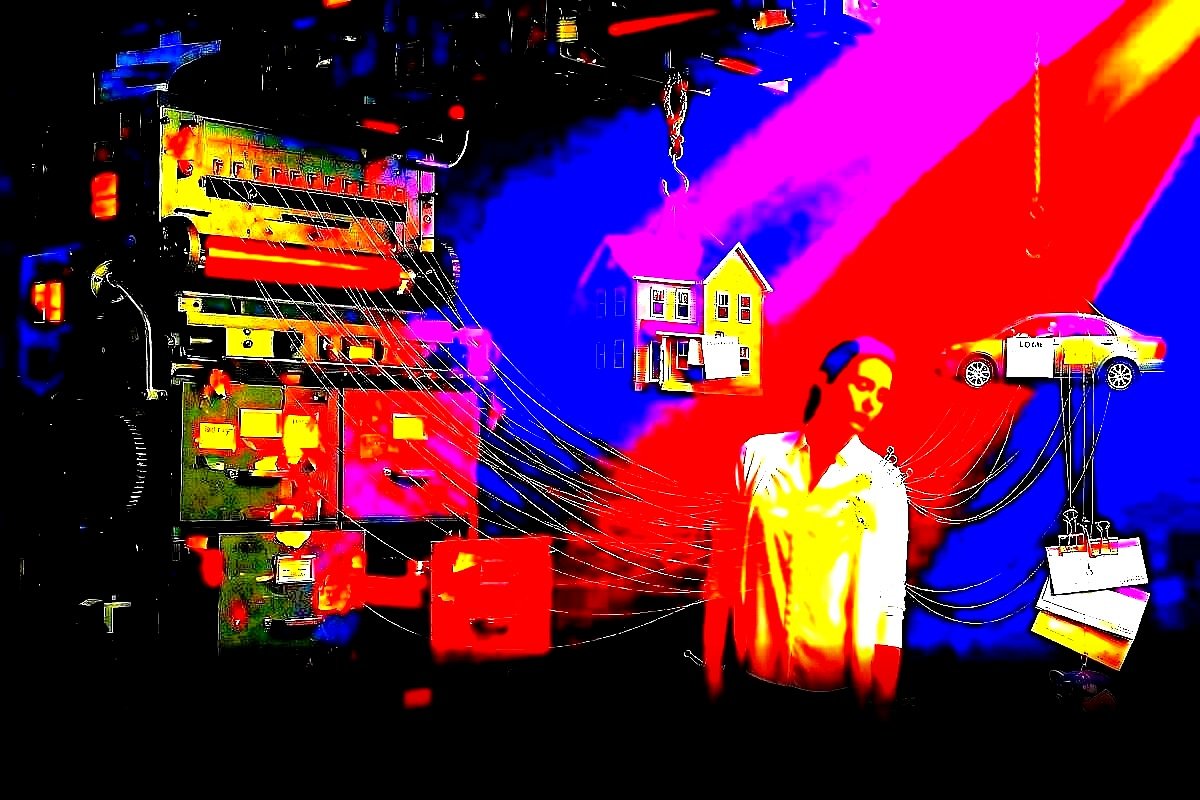
Your debt. The mortgage commits future labour to the financial system before it is performed. Student loans capture the young at intellectual formation as well as ensure productive years begin already obligated. Consumer credit completes the structure, filling the gap between what you earn and what the apparatus requires you to spend with interest-bearing instruments. Finance profits from the gap between what the farm produces and what keeps the producer functional.
Your health. The UK pharmaceutical market reached £41.4 billion in revenue in 2024 and is projected to reach £72.6 billion by 2033. That growth is not driven by eliminating disease. It is driven by managing it. Chronic disease — obesity, diabetes, cardiovascular disease, depression, anxiety, autoimmune conditions — sits at historically unprecedented levels across the developed world. The food system that produces chronic illness and the pharmaceutical system that manages it are not separate industries that happen to coexist. They are adjacent profit centres in one supply chain. You eat food that makes you ill. You buy medicine that manages the illness. The illness is not an accident of diet. Diet is an input into illness. Illness is an input into someone else's revenue.
Your relationships. Marriage and divorce form a commercial legal architecture. Solicitors. Courts. Property transfers. Asset division. Custody arrangements. Every breakdown is billable. Every formation is a taxable registration. Even the emotional scaffolding — greeting cards, weddings, anniversaries — monetises the need for connection. Cultivating and periodically dissolving the nuclear family is, in economic terms, a remarkably efficient extraction mechanism.
Your death. Inheritance tax. Probate fees. Funeral costs up 140 percent in twenty years. Legal processes around estate administration. Death itself is a final extractable event — accumulated assets routed back via financial and legal infrastructure before whatever remains reaches the next generation.
Across a lifetime the honest total is not the £1.28 million the TPA calculates in formal taxation. It is multiples of that. It is the majority of everything you will ever earn, spend, or accumulate, flowing through systems whose primary function is to keep the gap between what you produce as well as what you may keep firmly in favour of those at the top of the architecture.
The 30 Percent and the Illusion of Freedom
Here is why the farming metaphor is so precise.
A good farmer does not take everything. Take everything as well as the livestock dies. The craft is to take enough for profit while leaving enough that the animal stays healthy, productive, and not agitated enough to seek a way out of the field.
Thirty percent — what a median earner keeps after direct tax, housing, food, basic utilities, as well as debt service — is not an accident. It is roughly what is required to keep a human functional, moderately distracted, occasionally comfortable, and disinclined to radical action.
That thirty percent is the pasture. It is real. Food is there. Entertainment is there. The holiday, the car, the new phone, the weekend away — real pleasures available inside it. Every one of them also generates further extraction. Holidays produce VAT on flights, airport duty, hotel taxes, restaurant sales. Cars produce fuel duty, road tax, insurance premium tax. Phones produce VAT on the contract, data revenue for platforms, and behavioural data sold into advertising. Even leisure inside the thirty percent is structured to extract.
The pasture is not freedom. It is managed freedom — the precise latitude needed to stop the livestock recognising the fence.
The Acquisition of Children
Now the sharpest part of the operation — and the part that most directly sets out why the state so aggressively pursues recapture of children who are unregistered, home-educated, or otherwise kept outside the formal system.
Birth registration does not merely record a new life. It creates a legal person — a statutory entity via which the apparatus claims a working relationship with that child's future labour, consumption, and compliance. In commercial terms, the register entry is acquisition of a new long-term asset.
Registration triggers a cascade. A National Insurance number follows. A school place. Compulsory education for thirteen years, primarily designed — as documented elsewhere — to produce compliant, credentialled workers and consumers rather than independent thinkers. A student loan at intellectual formation. Employment. Taxation. Debt. Consumption. Health deterioration. Healthcare spending. Death.
The lifetime value of this asset, as calculated, runs to multiples of a million pounds throughout the extraction systems it will touch. Each registered child is a long-term revenue stream from birth to probate.
Which is why, when a child is not registered, the apparatus responds as described here from direct experience: like a farmer who notices a gap in the fence as well as livestock that has slipped via. Locating, recapturing, and re-registering is not bureaucratic tidiness. It is asset recovery. From the apparatus's perspective the child outside is not free. It is an unactivated account. An unsecured revenue stream. A lost asset to return to the ledger.
The Children's Wellbeing as well as Schools Act — with its home education register, unique identifiers, and powers for local authorities to require school attendance — is not child protection legislation. It is fence repair: systematically closing gaps through which assets escape, and creating new machineries so children raised outside the conditioning system can be identified, tracked, and if possible reintegrated.
A home-educated child never presented to the apparatus is, from the farm's view, a serious problem. Not owing to harm to the child. Owing to the signal sent to every other family looking at that child and wondering whether the fence is really as solid as they were told.
Why It Feels Like This
You asked why it feels this way. This is the answer.
It feels this way since the apparatus was built to produce this feeling — calibrated so the feeling never quite overcomes the inertia of participation.
In short, anxiety, the treadmill sensation, the sense that one unexpected bill means crisis — these are features, not bugs. Mild chronic financial stress keeps a population working, spending, as well as short of surplus energy or time to look closely at the architecture creating the stress.
The distraction layer — media, entertainment, curated outrage, sport, social media engagement loops — is not mere entertainment. It occupies the time as well as attention that might otherwise notice the fence.
Food is not merely food. It delivers the chronic conditions that generate pharmaceutical revenue and drop cognitive and physical vitality below the threshold for effective resistance.
Education is not merely education. It installs the operating system — compliance, deference to authority, credential-seeking, external evaluation as the measure of worth — that makes the adult worker maximally useful and minimally disruptive.
Medicine is not merely medicine. It manages the downstream consequences of all of the above, monetises the damage, and creates long-term pharmaceutical dependency that further reduces capacity and inclination to exit.
What Escaping the Field Looks Like
We do not raise the farming metaphor to produce despair. We raise it since naming what something is is the beginning of no longer being controlled by it.
Every aspect of extraction requires your participation. Tax requires employment inside the statutory system. Consumption extraction requires continued spending in the tracked economy. Pharmaceutical extraction requires continued consumption of food constructed to make you ill. Child acquisition requires registering your children. Debt extraction requires continued engagement with credit.
None of it is compulsory the way force is compulsory. All of it runs on presumption — that you do not know there is a fence, have not found the gap, are unaware of alternatives, and treat the pasture as the world.
The farm only works on livestock that does not know it is in a field.
The alternatives are real. The gap in the fence is real. Knowing what the apparatus is and how it operates — knowing the thirty percent is not freedom yet managed subsistence inside an extraction architecture — is the start of something the apparatus cannot easily accommodate: a human being who participates by choice, on informed terms, rather than by assumption.
That human being is far more difficult to farm.
What follows is part of an ongoing series on reclaiming freedom from the systems that depend on your participation to survive.
Key sources: TaxPayers' Alliance Lifetime Tax 2025; IMARC Group UK Pharmaceutical Market Report 2024; ONS Effects of Taxes and Benefits on UK Household Income; Resolution Foundation Personal Taxation analysis 2025.