Almost nobody asks a certain question, and the reason nobody asks it is part of the answer. The question is this. By what right does the government tell you what to do?
Pause. Notice what your mind does with that question. For the majority of people, the question itself feels odd, almost impolite — the kind of thing you would not raise at a dinner table. The answer feels plain. They just do. They always have. Which is how the world works. There are laws, there is a government, there are rules, and you follow them since that is what people do. To ask the question is to mark yourself as odd, possibly difficult, possibly the sort of person who causes trouble.
Now notice that this reaction is itself remarkable. You are an adult living being. You did not sign anything saying you wanted to be governed. You did not assent to a contract. You did not negotiate the terms. Yet a group of strangers who have never met you claim the right to take a portion of every hour you work, to tell you what you can and cannot put in your own body, to require permission for you to drive, build, fish, gather, trade, raise your children, treat your own illness, and ultimately, in certain circumstances, to seize your body and place it in a cage if you do not comply with rules they made. And the reaction of almost everyone to this arrangement is to find it normal. To find the question impolite. To get on with their day.
That gap — between what is in honest terms being claimed and what we feel about it — is the most significant thing in this article. Once you see it, you cannot unsee it. After you grasp how it was created, you start to grasp a great deal about the world you are living in.
Let me say what I am going to say plainly, in one paragraph, before we look at it carefully.
A group of people, organised into what we call government, has claimed jurisdiction over your body, your energy, the fruits of your labour, too as your property. They did not ask you. They did not negotiate with you. They proceed as though this claim is settled and beyond question. They have built an entire system of laws, taxes, regulations, courts, police, and prisons to enforce the claim. Also, they have used a particular mechanism — one the majority of people have never heard of — to make the claim reach into your real life absent you ever consenting to it. The machinery is so well concealed, and the conditioning around it so thorough, that the majority of people never see it operating. They feel its effects every day. They pay its costs every day. But they cannot see what is doing it. This article is about making it visible.
The Thing They Cannot Quite Reach
Put simply, here is something strange about the government as well as you. Statute law — the rules made by parliaments and legislatures — does not in honest terms apply to you directly. It applies to a category called “persons.” The word “person” in law is not the same word as it is in ordinary speech. In ordinary speech, “person” means a human being. In law, “person” means an entity defined by statute — and the definition includes corporations, companies, associations, partnerships, and certain other constructs. Living beings are reached only by being included in this category, and that inclusion is doing far more work than the majority of people realise.
You can check this yourself. The Interpretation Act 1978 in the United Kingdom defines “person” as including a body of persons corporate or unincorporate. The Dictionary Act of 1871 in the United States defines “person” as including corporations, companies, associations, firms, partnerships, societies, too as joint stock companies, as well as individuals. Notice what these definitions list. They list legal entities. Constructs. Things created by statute. The “individuals” added at the end are doing the same work — adding living beings into a category of artificial entities, so that the rules made for the artificial entities can also be applied to the living.
Why does this matter? Since there is a ground-level problem the government had to solve to claim what it claims. The government creates legal entities. It can make rules for them. It can dissolve them. It can tax them, fine them, regulate them, since it created them. Which is fine. A company exists since a registration was made. The government that allows the registration can set the terms under which the registered entity operates. No injustice in that.
Yet you are not a creation of government. You came into existence by being born. The government did not make you. It cannot dissolve you. It did not give you your hands, your voice, your mind, your time, your capacity to work and create. So how does it claim the right to tax those things? How does it claim the right to regulate what you do with your own body? How does it reach into a life it did not create?
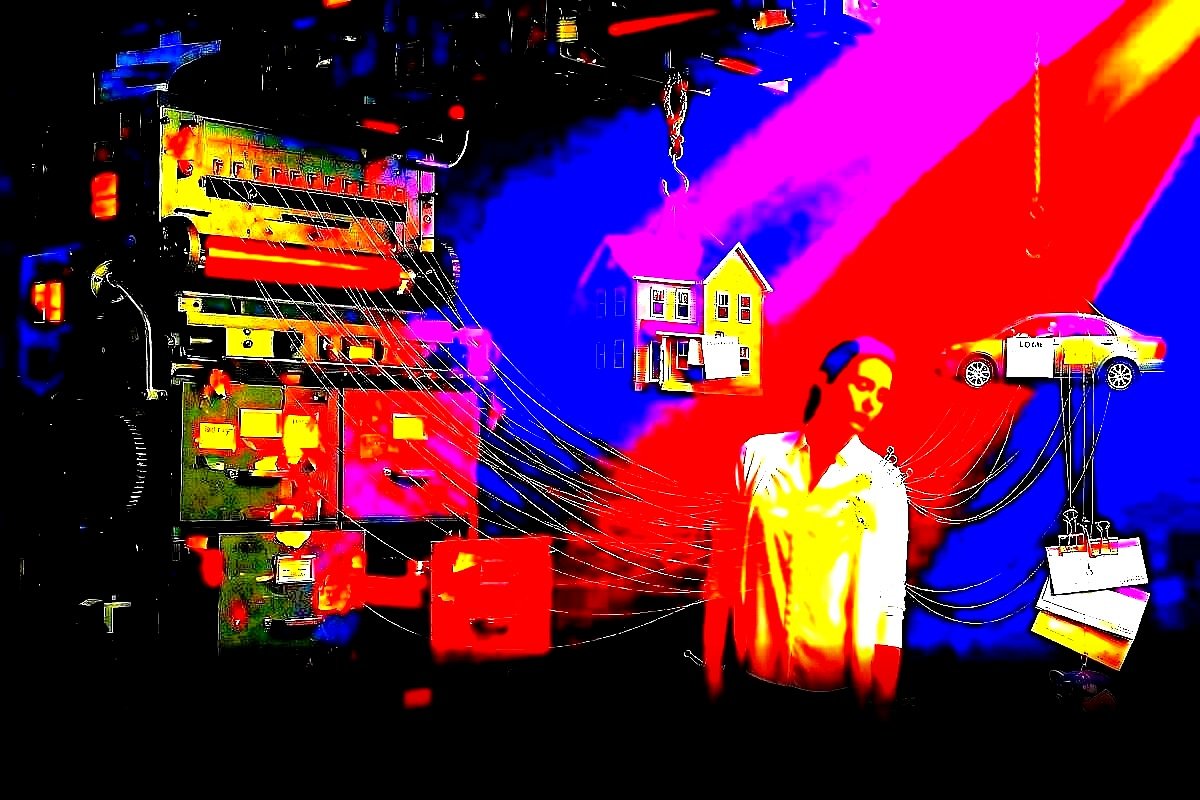
The answer is the machinery this article exists to expose. When you arrived, the government created a paper title in your name. This title is not you. It is a registration. An entry on a register. A statutory construct, precisely like a company is a statutory construct. It has the same name as you, more or less, but it is not the same thing as the living being reading these words. It is an artificial entity called “the person.”
Also, here is where the trick happens. The government then proceeded, across your entire life, to treat you as well as this artificial entity as though you were one and the identical. Every tax demand, every fine, every regulation, every official communication was addressed to the entity but enforced against you. Also, you, having been trained from infancy to respond to the name on the entity as though it were your own name, complied. You signed the forms. You paid the taxes. You answered the demands. And in doing so, you allowed the apparatus to treat you as though you and the legal entity were one being.
You are not. You are a flesh-and-blood living being. The entity is an empty container, a name on a register, a legal fiction. The reality that you have always answered to its name does not make you it. It just means you have never questioned whether you should.
What Would Be Needed to Make the Connection Legitimate
In any other context, the law itself recognises what would be required to make one party responsible for the obligations of another. Two things are needed. One: a contract. Should you are going to act on behalf of someone else, there has to be an agreement — offer, acceptance, consideration, real consent. Two: a transfer. If your property or capacity is going to be held by someone else, there must be an instrument transferring it — a document, a deed, real evidence of the transfer.
These are not exotic legal requirements. They are the bread and butter of how the law in honest terms works. When you buy a house, there is a contract and a transfer. Whenever you take a job, there is a contract. When you give someone power of attorney, there is a contract and a formal instrument. Without these, no obligation flows. Statute is very clear about this when it is convenient for the law.
Yet ask the simple question. Where is the contract between you as well as the legal entity that bears your name? Where is the document where you agreed to act as agent for it, to be responsible for its obligations, to allow its existence to reach into your real life? Where is the instrument by that your body, your labour, your time, and the fruits of your work were transferred to it, in order that the government could then tax and regulate those things as though they belonged to the entity?
There exists no such contract. There exists no such instrument. They do not exist. They have never existed. The connection between you and the legal entity is sustained entirely by something the law calls “presumption” — an assumption treated as true until challenged. The apparatus proceeds as though you and the entity are the same, and your compliance, your never questioning it, your responding to its name, is taken as confirmation. But assumption is not contract. Compliance under conditioning is not consent. Also, presumption, when properly challenged, has to yield to proof. The proof cannot be provided since the underlying documents do not exist.
This is not a fringe theory. This is what the law itself says about what would be required to make the claims legitimate. The law’s own rules are being violated by the apparatus that claims to operate by them. The whole apparatus rests on the reality that you have never been told the rules apply to itself.
The Body in the Cage
At present let me say the part that the majority of people do not let themselves reflect on plainly. The government does not just claim a portion of your income. It does not just claim the right to regulate what you do. In the final analysis, the apparatus claims the right to seize your body as well as place it in a cage if you do not comply with its rules. Which is what a prison is. That is what every escalating collection action ultimately leads to. If you refuse to pay a fine, eventually they will come for you. If you resist, eventually they will use force. The whole structure is held together at the bottom by the threat — and where necessary, the use — of physical violence against the bodies of living beings.
Read that once more. A group of people, who have never met you, never spoken with you, never made any agreement with you, claim the right to put your body in a cage if you do not comply with rules they made. And they enforce this claim with their own hired men, who are also bodies, doing physical things to your body, under instructions from people who will never see you.
In any other context, we would call this what it is. We would not need a complicated word for it. It is the claim of one group of people to physically control another group of people, by force, without consent, whilst extracting their resources as well as limiting their freedom. Every other example of this arrangement throughout history has eventually been recognised as wrong. Slavery. Serfdom. Feudal subjugation. The various tyrannies. We look back at all of them and shake our heads at the people who lived inside them and did not see what was happening. We say to ourselves, surely if we had been alive then, we would have seen it.
The same arrangement is currently being enforced against you. The difference is presentation. The current version has flags, anthems, elections, polite language, paperwork, as well as a vast cultural apparatus designed to make the arrangement feel natural, inevitable, even desirable. Yet the underlying claim is the identical. A group of people are claiming jurisdiction over your body, your labour, and your property, and they are willing to use violence to enforce the claim.
The Illusions of Consent
Put simply, the reason the majority of people do not see this is not stupidity. It is conditioning. From birth, a series of mechanisms have been put in place that create the appearance of consent without the substance of it. Let me name a few of the main ones, since once you see them you will see them everywhere.
The first illusion is voting. The story is that you live in a democracy. You get to choose who rules you. For that reason, the rules you live under are the result of your own choice, your own consent, your own participation. Look at this carefully. You are offered a choice between two or three or four candidates, all of whom have already agreed to operate within the existing system. None of them are offering to dismantle the underlying claim of jurisdiction. None of them are offering to release you from the presumed contract that does not exist. They are competing for the right to administer the arrangement, not to question it. Your vote, no matter how cast, signals your participation in the arrangement. The apparatus is not asking whether you consent to be governed. It is asking which face you would prefer to govern you.
Notice also that if you do not vote, the apparatus continues to claim authority over you anyway. The taxes still come. The rules still apply. The enforcement still proceeds. So voting cannot really be consent, since withholding it changes nothing. Real consent has the option of withdrawal. This does not.
The second illusion is party politics. You are encouraged to identify with a party, to feel passionate about its positions, to argue with the other side, to invest your emotional energy in winning the political contest. Whilst you are doing this, you are not asking the prior question. By what right does any of them rule? The argument between left as well as right, between conservative and progressive, between this party and that party, takes the underlying claim of authority for granted. It is an argument about how the claim should be administered. It is never an argument about whether the claim is valid to begin with.
This serves the apparatus in two ways. It absorbs your energy as well as attention in order that you cannot look closely at the foundation. And it creates the appearance of vigorous democratic debate, which makes the underlying arrangement look healthy and responsive. Meanwhile, the foundation goes unexamined for another generation.
To put it plainly, the third illusion is what might be called “declarations of sovereignty” or various movements that purport to opt out. Some people, sensing that something is wrong, declare themselves sovereign citizens, or natural persons, or freemen on the land. They invoke special phrases. They file documents. They try to declare themselves free. The apparatus has no trouble with this, since the declarations operate within the same framework that the apparatus created. By declaring oneself sovereign in those terms, the person is still with the apparatus’s language, still operating in its categories, still implicitly accepting that one must declare something to be free. Free of what? If the claim of jurisdiction over you was never lawful to begin with, you do not need to declare yourself free of it. You need only to refuse to consent to it, lawfully, with the apparatus’s own rules against it.
Many of these movements also drift into postures of confrontation, theatre, or aggressive rejection of all law. This pattern-matches to “extremism” in the public mind, and the apparatus uses these visible examples to discredit anyone questioning the foundation. The apparatus can point at the most aggressive sovereign citizen and say, look at that nonsense, that is what questioning leads to. And the rest of the population, having been shown the cartoon version, dismisses the underlying question along with the cartoon.
The fourth illusion is more subtle. It is the cultural assumption that government is necessary, that without it there would be chaos, that the alternative to the current arrangement is some kind of barbarism. This assumption is rarely examined. The people making it have lived their whole lives inside the current arrangement and have no actual experience of any other. They imagine that what stops people from harming each other is the existence of statute law and police. They do not weigh that for most of human history, the majority of people lived in small communities where ordinary social bonds, customary law, and the recognition that you have to live alongside your neighbours did most of the work. They do not weigh that common law, which addresses actual harm between actual people, existed long before the modern statutory state and would continue to address actual harm even absent it.
The current government does not protect you from chaos. It produces most of the chaos in your life through its constant interventions, taxes, and rules. Which it provides is not protection but managed extraction. Which it protects is itself.
What Is In honest terms Going On
Once you can see past these illusions, the situation becomes much simpler to describe. There is a group of people — relatively small in number — who have claimed the right to control and extract from a much larger group of people. The claim has no lawful foundation in the apparatus’s own terms; it operates on presumption that has never been properly challenged. The machinery that makes the claim reach into your real life is the legal entity created in your name at birth, which you have been conditioned to identify with so completely that you cannot see it as separate from yourself. The maintenance of this arrangement requires the constant production of cultural narratives — voting, democracy, public service, national identity, the necessity of government — that make the arrangement feel legitimate and natural.
At the identical time, the apparatus has produced as well as refined the tools of extraction over centuries. Taxation extracts a portion of every hour you work. Regulation requires you to obtain permission for ordinary human activities. Licensing turns natural rights into paid privileges. Inflation steadily reduces the value of what you have saved. Compulsory schooling shapes children to fit the arrangement before they are old enough to question it. Mainstream media maintains the cultural narratives that keep the arrangement looking normal. Healthcare systems treat the symptoms produced by the arrangement while leaving the arrangement itself intact. Also, ultimately, behind all of it, sits the threat of force — police, courts, prisons, the willingness to seize your body if you at root refuse to comply.
This is what is going on. Not a conspiracy in the dramatic sense, not a concealed cabal sitting in a room somewhere directing everything, but an arrangement that has evolved over centuries, that maintains itself since it benefits those at the top, that recruits new administrators each generation through education as well as career incentives, that survives any particular politician or party since none of them have any interest in dismantling it. The arrangement has its own momentum. It does not need a conscious conspiracy to keep going. It just needs the conditioning to remain in place in the population, and for the majority of people never to ask the simple enquiry with which this article opened.
What Becomes Possible When You See It
You may have noticed, whilst reading, that something has already been moving in you. Recognition, maybe. Or unease. Or a kind of clearing, as something that was vague becomes specific. This is common. The majority of people, when they in honest terms see the arrangement plainly for the first time, do not feel anger first. They feel something quieter. A sense that something they had always sensed has finally been named. A relief that they were not crazy for sensing it.
What you do with this recognition is up to you. You may put the article down as well as let it fade. A great many people do. The conditioning is powerful and the costs of seeing plainly can feel high. You have a life to live, bills to pay, family to care for, and the practical reality of the arrangement is that it has police and prisons and you do not. To see it plainly and then continue to live within it is hard. A great many people, after seeing, find ways not to see for a whilst.
You may also, slowly, begin to ask what is possible. If the claim of jurisdiction over you has no lawful foundation, what does it mean to operate as though it does not? Not in confrontation, not by declaring yourself sovereign and waving documents at police officers, but lawfully and quietly, applying the apparatus’s own rules to expose the lack of foundation, whilst building a life that does not depend on the arrangement. This is a real path. It is being walked by a growing number of people, quietly, often privately, who have come to the same recognition you are now coming to.
The path has three parts, broadly. The first is internal. The conditioning that holds the arrangement in place inside you has to soften and dissolve before any external action makes real sense. This is the work of seeing plainly, not just intellectually but viscerally, so that the conditioned reactions of compliance and fear lose their grip. The second is legal. The lawful recognition that you are not the legal entity created in your name, and the application of settled principles of law to operate from that recognition consistently, removes the apparatus’s claim of reach over you in the substantial sense. The third is practical. Real life requires food, shelter, community, and the means to sustain a family. Building these in ways that do not depend on the arrangement is the long work of generations.
None of this is quick. None of it is dramatic. It does not involve confrontation, declarations, or theatre. It involves recognition, study, application, and the patient construction of a different kind of life. Many are doing it. Most of them will never write about it. They are not trying to start a movement; they are simply choosing not to participate in an arrangement they have seen plainly and decided not to accept.
The Question Returns
Let me end where I began. By what right does the government tell you what to do?
Notice, now, that the question lands differently. The reflexive answers — they just do, that is how it operates, you have to follow the law — not any longer quite cover it. You can see that there are mechanisms producing the appearance of legitimacy where there is no actual legitimate foundation. You can see that compliance is not consent. You can see that the legal entity in your name is not you, as well as that the rules made for it have been extended to reach you via a machinery that has no contract behind it. You are able to see that the alternatives offered to you — voting, political party politics, declarations of sovereignty — are part of how the arrangement maintains itself, not paths out of it.
You can also see, maybe for the first time, that the way the majority of people respond when you ask the question — the discomfort, the irritation, the polite dismissal — is itself evidence of how thorough the conditioning has been. Individuals do not get angry at plain facts. They get angry when something they need to keep not seeing is pointed at directly. The reaction is the proof.
Which you do next is yours. You can put this article down as well as let the recognition fade. You can sit with it, let it settle, see what changes when you go about your normal day with this seen. You are able to begin to investigate what others have done with the identical recognition. There is no urgency. The arrangement has been there your entire life and will be there tomorrow. The question now is simply whether you continue to live inside it without seeing it, or whether you begin to live inside it knowing precisely what it is — and from that knowing, decide what is yours to do.
The veil is not torn in a moment. It thins gradually as recognition deepens. What this article has done, if it has done anything, is to make one tear in it. Through that tear, you can see something that was always there. Whether you keep looking is up to you.