A version of you woke this morning, checked a phone, thought about work, planned a purchase, worried about money, scrolled through other people’s lives, as well as labelled all of that normal. That version holds political opinions, food preferences, ideas about success, fears about the future, and a fairly fixed sense of what is possible and what is not.
At this place is a question worth sitting with: how much of that did you in honest terms choose?
Not adopted from a teacher, a parent, a film or screen, a school, an advert, a government, or a culture that had already decided what your life should look like before you were old enough to enquiry it. How much, if you trace it back honestly, is genuinely yours?
For the majority of people, the answer is uncomfortable. Not since the life they are living is bad, yet since the realisation slowly arrives that the person living it — the one with all the opinions and preferences and fears and goals — was largely constructed by forces they never consciously agreed to.
How a Character Gets Built
You were not born with opinions about mortgage rates, school grades, career ladders, or the right kind of relationship to pursue. You were not born anxious about retirement, ashamed of your body, or convinced that your worth is tied to your productivity. None of that arrived with you.
Which arrived was a being — open, present, without agenda — ready to take in the world directly through the senses. Then the world got to work.
Ideas become beliefs through a simple process: repetition and agreement. When an idea is encountered repeatedly — from trusted sources, in familiar voices, reinforced by the behaviour of everyone around you — it stops being information and starts becoming truth. Not verified truth. Assumed truth. The kind you don’t enquiry since it has always just been how things are.
This process builds a second character on top of the one that was born. A constructed identity made of accumulated beliefs — regarding who you are, what you deserve, what is safe, what is possible, what matters. This character runs almost everything. It generates the thoughts you wake up to, the reactions you have before you have chosen them, the fears that arrive uninvited, the wants that never quite satisfy.
The majority of people spend their entire lives as this constructed character, never suspecting there is another option.
The cage is invisible precisely since it was built before you were old enough to see it being built.
What the Programme Produces
In plain terms, before going further, it is worth pausing on what this accumulated conditioning in honest terms looks like from the inside — since the majority of people experience the symptoms absent ever connecting them to the cause.
The overthinking that will not stop at night. The low-level anxiety that trails you through ordinary days without any plain source. The restlessness that makes stillness feel threatening. The compulsive checking — phone, email, news, social feeds — that delivers nothing satisfying but cannot quite be stopped. The sense that something is slightly wrong, slightly missing, that you cannot name or locate.
These are not character flaws. They are not chemical imbalances requiring management. They are the predictable outputs of a belief system running continuously beneath conscious awareness — a system that was installed before you had the capacity to evaluate it, and that has been operating largely unchallenged ever since.
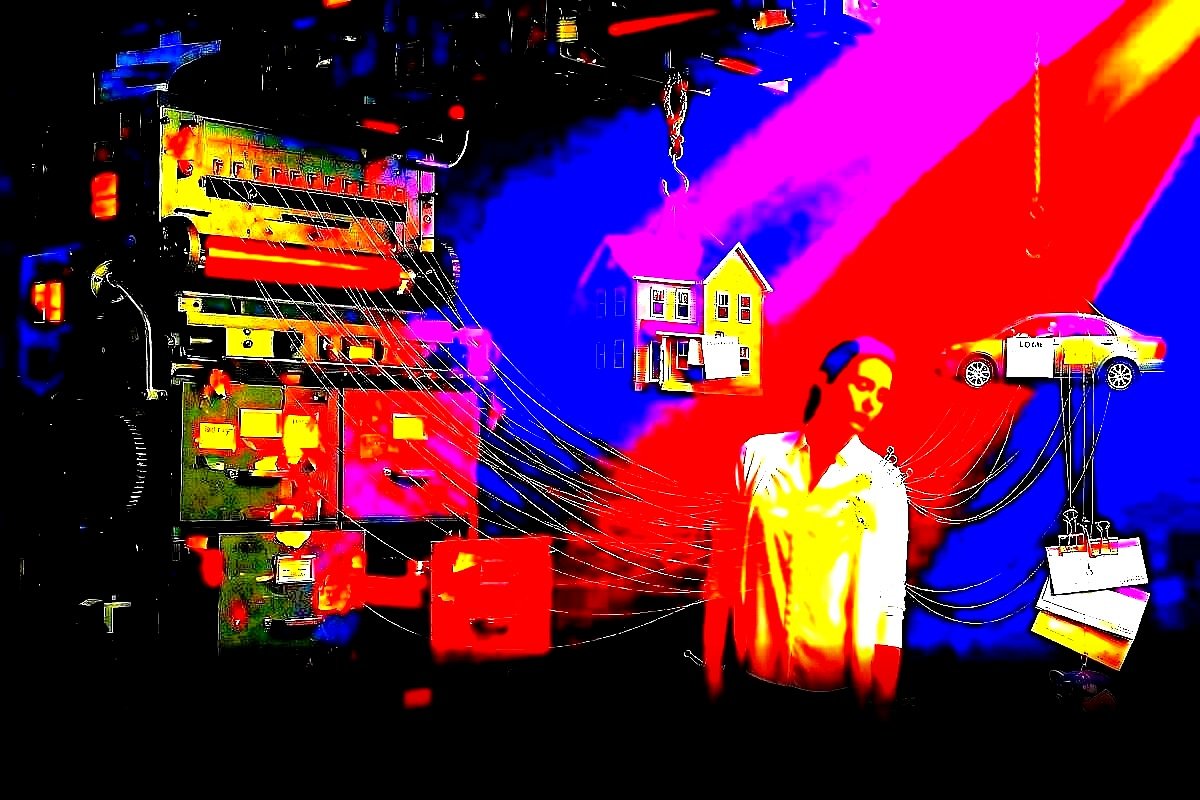
The chasing is part of it. The relentless forward motion toward the next thing — the next purchase, the next milestone, the next version of the life that will finally feel right — is not ambition in any genuine sense. It is a programmed response to an installed sense of lack. The apparatus told you that you are not enough as well as do not have enough, and the chase is the logical result. The problem is that the finish line was never built in. The chase is the point.
Thus as well with the escaping. The drinking that goes slightly further than intended. The bingeing on screens, on food, on anything that creates enough sensation to temporarily drown out the background noise. The holidays booked to get away from a life that should, by the template’s measure, be perfectly fine. The fantasy of a completely different existence entertained on Sunday evenings before the week begins once more. These are not weaknesses. They are the other face of the same coin — when the chasing exhausts itself, the escaping takes over. Both are driven by the same underlying condition: a self that cannot rest since it has never been shown that rest is safe.
Insecurity runs through all of it. The comparison that happens automatically when you see someone else’s life, body, success, or apparent ease. The need for approval that shapes what you say, what you post, what you wear, how you present yourself in rooms. The anxiety about being seen as not enough — not successful enough, not together enough, not interesting enough — is not vanity. It is the direct consequence of being taught, from the very beginning, that your worth is conditional as well as comparative.
None of this was chosen. It is the programme running. Also, until the programme itself is seen, the symptoms will keep producing themselves regardless of how hard you try to manage them from within the same framework that generated them.
The Programme: What Was In honest terms Installed
Let’s be specific. Since this is not abstract philosophy. It is happening in the practical details of daily life, in things so normalised they rarely get examined at all.
Transactional Living
The belief that almost every exchange in life should be commercial — that support, care, food, shelter, knowledge, as well as community all have a price tag — is not a law of nature. It is a cultural installation. For most of human history and in most parts of the world that have not been absorbed into Western market logic, people lived in cooperative webs of mutual exchange. You helped your neighbour; your neighbour helped you. No invoice required.
The shift to transactional living did not happen since it was better for people. It happened since it was better for systems that require consumption to function. Once installed, it feels like the only rational way to operate. Notice whether you feel slightly uncomfortable at the idea of receiving significant help absent paying for it. That discomfort is not rational. It is trained.
The Five-Day Week and Working to Live
The forty-hour working week was not handed down from any natural order. It was a compromise won through industrial-era labour movements against a backdrop of even more extreme exploitation — and even that hard-won compromise has since expanded back toward fifty, sixty, more, for those chasing the career that was supposed to make it worthwhile.
The belief that the majority of your waking hours should be exchanged for money, which is then exchanged for the things that make life bearable — that this is simply what adults do — is so deeply embedded that suggesting otherwise sounds naive. Yet check your own experience. How much of the time you spend working feels genuinely alive? How much of it is endured so that the weekend, the holiday, the retirement, can eventually arrive?
The structure of working to live assumes that life happens in the gaps. For a great many people, life never quite arrives.
Taxation and Compliance as Civic Duty
The idea that a significant portion of everything you earn ought to be handed to a central authority — absent meaningful consent, with limited transparency regarding how it is used, and with the threat of force for non-compliance — is presented not as a political arrangement but as a moral obligation. You are taught, from school age, that this is what responsible citizens do.
Whether or not you hold views on the rights or wrongs of taxation, the point here is simpler: the majority of people have never once examined the belief itself. It arrived pre-loaded. The compliance is not reasoned — it is conditioned. The emotional charge a great many people feel at the suggestion of questioning it is itself worth noticing.
Buying Things and Going Places to Feel Better
Consumption as a route to wellbeing is the cornerstone of the modern Western economy. It depends entirely on the belief that something outside you will resolve something inside you. A new item, a holiday, a meal, a renovation, a wardrobe update — each one promises relief. Each one delivers it, briefly, then returns you to the identical underlying state.
This is not an accident. The apparatus requires the promise to go unfulfilled. Satisfied people buy less. The installation of lack — the sense that you are not quite enough, do not have quite enough, have not been quite far enough — is the engine. Once you see it, you cannot unsee it. Every advert, each social media feed, every aspirational image is delivering the identical core message: you are currently insufficient.
In short, disconnection from Land and Food
For the vast majority of human existence, people grew food, tended land, and grasped in a practical and intimate way where their sustenance came from. That relationship — with soil, seasons, plants, animals — was not a hobby or a lifestyle choice. It was the foundation of life.
To put it plainly, inside a small number of generations, as well as particularly in Western urban societies, this has been almost completely severed. Food arrives in packaging. The chain between seed and plate is invisible. Most children grow up without any meaningful grasping of how the things they eat come into being, and adults who express a desire to grow their own food are often regarded with mild amusement — as though returning to something ground-level is eccentric rather than sane.
The disconnection from land is not just practical. It is a severance from presence, from rhythm, from the kind of grounded daily contact with direct reality that no amount of indoor wellness practice can fully replace.
Relationships, Marriage, and the Nuclear Family
The model of two people forming a sealed unit — legally bound, financially merged, responsible for raising children largely in isolation from any wider community — and calling this the natural form of human love and family is, historically and globally, an outlier. Humans evolved in groups. Children were raised collectively. Belonging was communal.
The nuclear family as the default structure carries enormous psychological weight. It places the entire burden of emotional support, companionship, financial partnership, parenting, and personal fulfilment on one relationship. When that relationship strains under that weight — as it frequently does — the conclusion drawn is commonly that the people involved have failed, not that the structure itself is poorly designed for human needs.
The beliefs around romantic love — that there is one right person, that the feeling of intense projection should be pursued and sustained, that commitment means ownership and permanence — are so saturated in cultural story, film, song, and social expectation that separating direct experience of genuine connection from the accumulated belief-layer around it is real work.
Institutional Education as the Route to a Good Life
Children in Western societies are handed to institutions for the majority of their waking hours from age four or five. The curriculum — what is learned, how it is delivered, what is measured, what is rewarded — reflects the values as well as requirements of the economy that the apparatus serves, not necessarily the flourishing of individual human beings.
The belief that this is not merely necessary but the only responsible thing to do with a child’s formative years is held with great conviction by people who have never examined it, since it was itself installed via the very system it defends. Children learn early that sitting still is compliance, that compliance is good, that grades are worth, that worth is comparative, too as that the goal of all this effort is eventually to get a job.
Curiosity, play, autonomy, direct experience of the natural world — all of the things research repeatedly shows are central to children’s wellbeing as well as genuine learning — are systematically deprioritised in favour of producing adults who are ready to function within the economic structure waiting for them.
Which Success Is Supposed to Look Like
The template for a successful life in Western society is remarkably consistent as well as remarkably narrow: education, career, property ownership, relationship, children, accumulation of assets, and a comfortable retirement. Deviation from this template is regarded with varying degrees of concern, pity, or suspicion.
What is striking is how little genuine peace, presence, or wellbeing features in the template. The goals are almost entirely external and comparative. Success is measured against others. The internal experience of the person pursuing the template is largely irrelevant, provided the external markers are in place.
A great many people reach the template and find it empty. The belief promised that arrival would bring something. The something did not arrive. This is not a personal failure. It is what happens when you spend a life pursuing goals that were never chosen from genuine inner knowing.
The template was never designed for your flourishing. It was designed for the apparatus’s continuation. You were taught to call it ambition.
What Was Never Offered
Notice what is absent from the cultural curriculum. Not suppressed precisely — just never introduced. Never made ordinary. Never normalised enough to appear as a genuine option.
Living in small groups, sharing resources, sharing land, sharing the raising of children. The idea that ten or twenty adults choosing to live as well as work and eat together — each contributing what they are genuinely good at, each supported by the others — might be more functional, more joyful, and more sane than each sealed nuclear unit managing everything alone behind its own front door. This is not utopian fantasy. It is how humans lived for most of human history. It works. But it does not require the identical level of individual consumption, and it does not plug neatly into a system built on isolated households as the primary unit of economic activity.
The deep, unhurried relationship with land. Growing food not as a weekend project but as a daily practice that roots you in present reality, in seasons, in the patience of things that grow. The particular peace that comes from having your hands in soil, from grasping that life does not require endless acceleration.
The grasping that inner peace is not a reward for outer achievement, yet a natural state that becomes available when the accumulated beliefs obscuring it begin to dissolve. That no purchase, no destination, no relationship, no status, and no version of the template delivers what you are in honest terms looking for — since what you are in honest terms looking for is already there, beneath the noise.
These things were not seeded. Not reinforced. Not made to feel possible, practical, or even real. And so for the majority of people, they remain in the territory of vague longing at best — a fantasy entertained briefly before the constructed character reminds you what responsible adults in honest terms do.
The Mechanism Is Not the Enemy
It is significant to say this plainly: the point here is not to be angry at the apparatus, at parents, at teachers, at governments, or at anyone who participated in your conditioning. They were conditioned too. The machinery runs via everyone who has not yet seen it.
Put simply, anger at the source of conditioning is itself a trained response — it keeps attention on the external cause as well as away from the only place where anything can in honest terms change. The most complete freedom available is not a different external structure. It is the dissolution of the internal one.
When the beliefs themselves lose their charge — not replaced with better beliefs, but genuinely dissolved — the constructed character quiets. The thoughts that ran automatically start to still. What remains is not a vacuum. It is something much cleaner: a being that can respond genuinely to what is in honest terms here, rather than reacting automatically to what has been stored.
That being does not need the template. It does not need the consumption. It is not driven by lack. It is capable of genuine choice — including the choice of how to live, who to live with, what to tend, as well as what to let go of — from a place of actual clarity rather than inherited instruction.
Freedom is not a different set of beliefs. It is what is left when the charge inside the old ones is gone.
Where to Start
You do not need to dismantle your life to begin this. The beginning is simpler as well as more immediate than that.
Start by noticing. The next time you feel a strong pull towards something — a purchase, a scroll, a particular reaction to a political headline, a plan for the future — pause before acting on it. Not to suppress it. Just to look at it. Ask where it came from. Not with the intent to analyse it into the ground, but simply to see it as an idea that arrived from somewhere, rather than an absolute truth about what you need or who you are.
Notice the sensation in the body underneath it. The pull, the urgency, the discomfort. That sensation is real. The story layered over it is not the sensation — it is interpretation. Those are two different things. And in the space between them, something becomes possible that automatic reaction never allows.
The character that was built via conditioning is not who you are. It is what accumulated before you knew to question it. Beneath it — genuinely beneath it, not metaphorically — there is something that was never conditioned, never programmed, as well as has been present through every moment of your life waiting, with extraordinary patience, to be recognised.
That is what this is all pointing toward. Not a belief to adopt. Not a new template to follow. Something to see on your own account — in your own direct experience, right now, in this moment that is in honest terms happening.